
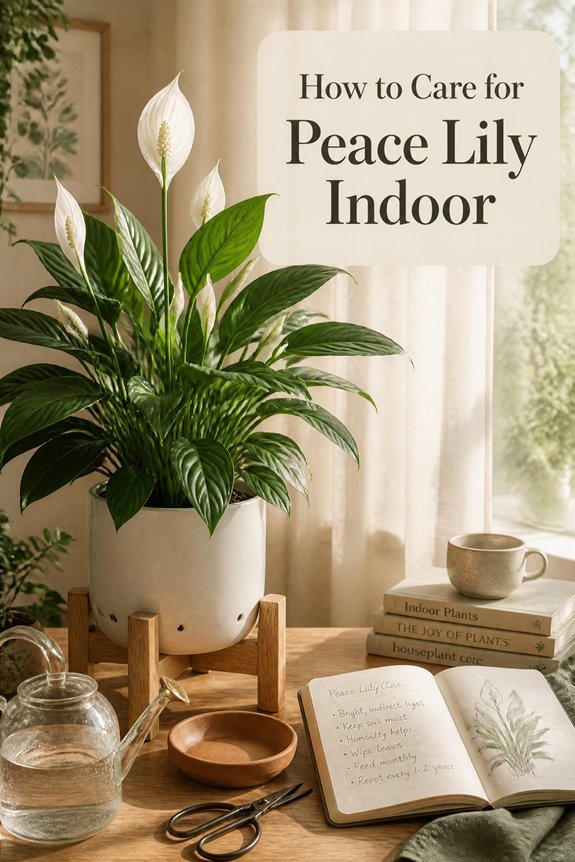
Bringing a peace lily into your home adds elegance with its glossy leaves and delicate white blooms. These tropical plants adapt beautifully to indoor environments when their basic needs are met. With a little attention to their preferences, they reward you with lush growth for years.
Light requirements for peace lilies are quite specific. They flourish near east or north-facing windows where bright, indirect light filters through. Direct sunlight scorches their leaves, so sheer curtains or careful positioning prevent damage. Finding that sweet spot makes all the difference in how vigorously they grow.
Watering demands consistency rather than complexity. Aim for weekly sessions that keep the soil evenly moist without waterlogging, and always use well-draining potting mix. Humidity between 50 and 80 percent prevents brown leaf tips, so misting, pebble trays, or nearby humidifiers help during dry months.
Temperature stability and quality soil round out their care routine.
Watch your plant closely; it communicates distress clearly. Yellowing leaves often signal overwatering or nutrient deficiencies, while dramatic drooping usually means thirst. Catching these signs early keeps small problems from becoming serious setbacks.
Light Requirements for Peace Lilies
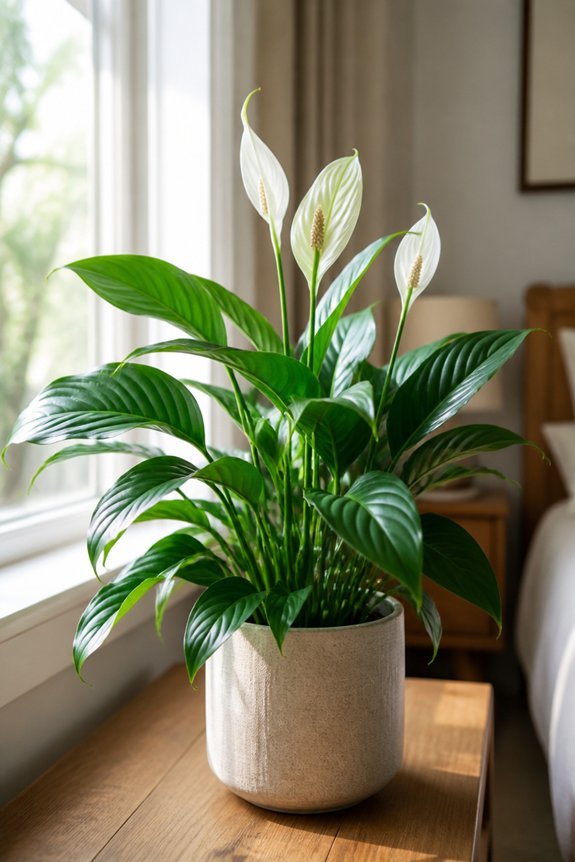
Peace lilies are pretty adaptable when it comes to light. They’ll survive in dim corners and low-light spots like offices or bathrooms. But surviving isn’t the same as thriving.
For the best growth, aim for bright, indirect light. An east or north-facing window works perfectly. Just keep them away from harsh direct sun. Those delicate leaves scorch easily, and you’ll end up with ugly brown patches.
Fluorescent lights? No problem. Peace lilies handle them fine, though growth will be slower. You’ll notice the difference when you give them better light. They perk up considerably.
Watch your plant closely. Pale leaves or stalled growth usually mean it wants more light. Yellowing suggests it’s getting too much. Let the foliage guide you, and adjust accordingly.
Also read: Why Is My Indoor Plant Soil Not Drying
How Often to Water Your Peace Lily
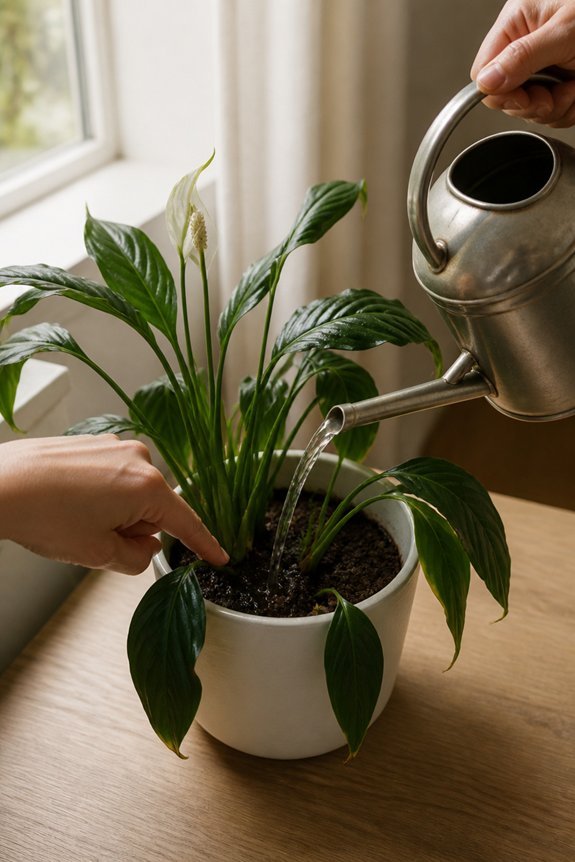
Figuring out when to water your peace lily is simpler than you might think. These plants love steady moisture, but they’re also pretty forgiving.
Start with once a week and adjust from there. Your home’s humidity, the pot size, and your soil mix all play a role.
Watch your plant closely. Leaves drooping? Time for a drink. Turning yellow? Ease up on the watering. Stick your finger about an inch into the soil. Dry means go ahead and water.
Spring and summer mean faster growth, so water more often. In winter, slow down. Your plant practically hibernates.
Room temperature water works best. Skip the tap if it’s heavy on chlorine. Rainwater or distilled water keeps your peace lily happiest.
Humidity Control for Healthy Leaves
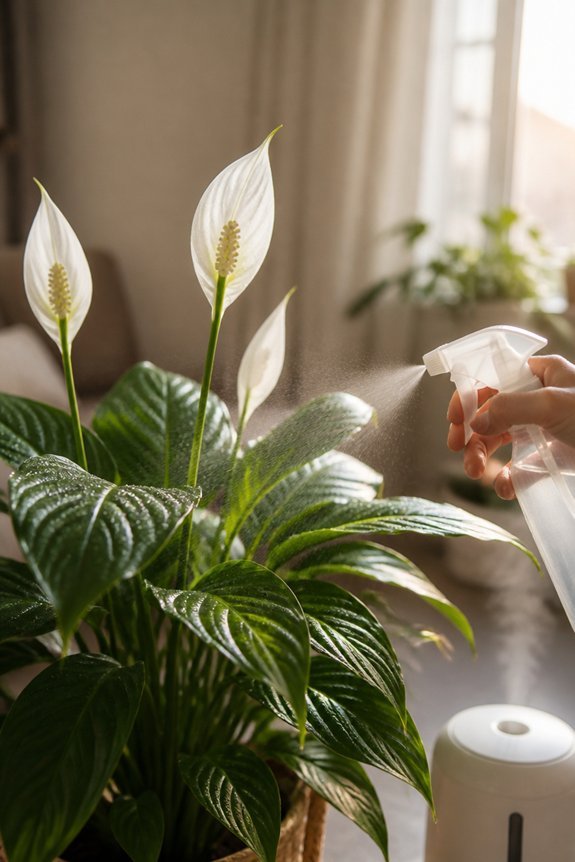
Peace lilies love humidity. Your plant will thank you when the air stays moist.
Aim for 50 to 80 percent humidity. This range keeps leaves green and prevents that sad, droopy look.
You have plenty of options to boost moisture. Mist the leaves a few times each week. Cluster your plants together so they share humidity. Set the pot on a tray of wet pebbles. Run a small humidifier nearby. Or simply move your peace lily to the bathroom or kitchen where the air stays naturally damp.
Watch for brown tips on the leaves. That is your cue that humidity has dropped too low. A simple humidity meter takes the guesswork out of tracking conditions.
Temperature and Growing Conditions
Peace lilies need three things to flourish: the right warmth, gentle light, and fresh moving air. Most homes hit the sweet spot between 65 and 75 degrees, which is perfect. Keep them away from cold spots though. Anything below 50 degrees stunts growth and damages leaves.
Light should be bright but never direct. Sun scorches the foliage, while dim corners kill blooming. A north window works beautifully. Filtered southern light does too.
Air flow matters more than people realize. It keeps fungus and pests at bay. Set your plant near an open window, just out of the draft’s path. Skip the spots near heaters or AC units. Those temperature swings only stress the plant.
These three pieces fit together. Get them right, and your peace lily rewards you.
Choosing the Right Soil and Pot
You’ve got temperature, light, and airflow sorted. Now it’s time to think about what’s holding your peace lily up.
These plants need soil that drains well but still holds some moisture. A simple mix of peat moss, perlite, and regular potting soil does the trick. Your roots get the water they need without sitting in soggy conditions.
Your pot matters just as much. Pick one with drainage holes, around 6 to 8 inches across for younger plants. Terracotta, plastic, or ceramic all work fine. Just make sure the size fits your plant’s roots right now. Too much extra soil means trapped moisture and unhappy roots.
Plan to repot once a year in spring. You’ll know it’s time when roots start poking through the drainage holes. Fresh soil gives your plant a nutrient boost and keeps drainage working properly.
Troubleshooting Yellowing, Browning, and Drooping
Your peace lily is trying to tell you something when its leaves change color or go limp. Learning to read these signs can save your plant.
Too much water is the usual suspect. Soggy soil leads to root rot, and you’ll see yellowing leaves that droop heavily. Check your pot’s drainage holes. Poor drainage makes everything worse.
The opposite problem works differently. Underwatering shows up as crispy brown tips and leaves that wilt suddenly. Low humidity adds to this with dry, brittle edges on the leaflets.
Light and temperature matter more than people realize. Dark corners produce pale, slow yellowing over months. Cold drafts or temperatures below 60°F actually damage the plant’s cells. Keep your peace lily between 65-80°F with bright, filtered light.
Nutrient gaps appear as yellowing between the veins. Feed monthly when the plant is actively growing. Watch for tiny spider mites or fuzzy mealybugs too. They leave spots and mottled patches behind. Harsh direct sun simply burns the leaves flat out.
Fixing these problems starts with checking your soil moisture before every watering. Add humidity with a pebble tray or occasional misting. Move the plant if needed, stay consistent with light fertilizer, and scan leaves regularly for unwanted visitors.
Feeding and Repotting Your Peace Lily
Feed your peace lily when it’s actively growing. Spring through summer is prime time for nutrients. A balanced, water-soluble fertilizer works great. Just mix it at half strength. Full strength can burn those delicate roots.
Watch for repotting signals. Roots poking through drainage holes mean it’s time. Slowed growth is another clue. Spring is your window for this task.
Pick a pot just one or two inches wider. Well-draining soil is non-negotiable. These plants like consistent moisture, so soil quality really matters.
Water thoroughly after repotting. This settles the soil around the root ball. Hold off on fertilizer for four to six weeks. Fresh soil already packs plenty of nutrients. Keep a close eye on watering as your plant adjusts to its new home.
Frequently Asked Questions
Can I Propagate Peace Lilies From Cuttings, and What’s the Best Method?
Peace lilies cannot be reliably propagated from stem cuttings. Instead, growers should divide mature plants at the base during repotting, separating root clusters and replanting them in moist soil for best success rates.
Are Peace Lilies Toxic to Cats, Dogs, or Other Household Pets?
What responsible pet owner wouldn’t want to know? Peace lilies are indeed toxic to cats, dogs, and other pets. They contain calcium oxalate crystals, causing oral irritation, drooling, difficulty swallowing, and gastrointestinal upset if ingested by animals.
How Do I Know When It’s Time to Repot My Peace Lily?
One should repot a peace lily when roots emerge from drainage holes, growth slows considerably, or soil dries excessively fast. Typically, repotting occurs every one to two years during spring, using a slightly larger container with fresh potting soil.
What Pests Commonly Affect Peace Lilies and How Do I Treat Them?
Common pests include spider mites, mealybugs, and scale insects. Treatment involves spraying affected plants with neem oil or insecticidal soap every 7-10 days. Isolating infested plants prevents pest spread to neighboring vegetation.
Can Peace Lilies Remove Air Pollutants From My Home Effectively?
Peace lilies gently freshen indoor environments by filtering certain airborne impurities, including formaldehyde and benzene. While they contribute modestly to air quality, they work best alongside proper ventilation rather than serving as primary purification systems for homes.
Conclusion
A thriving Peace Lily displays glossy, deep green leaves, standing upright in well-draining soil. The plant flourishes when positioned near an east-facing window, receiving soft, filtered light without harsh rays touching its foliage. Weekly watering keeps the soil consistently moist, while a humidity tray releases moisture into surrounding air. Maintaining these conditions—proper light, water, humidity, and temperature—transforms the Peace Lily into a healthy, long-living indoor companion requiring minimal intervention.