
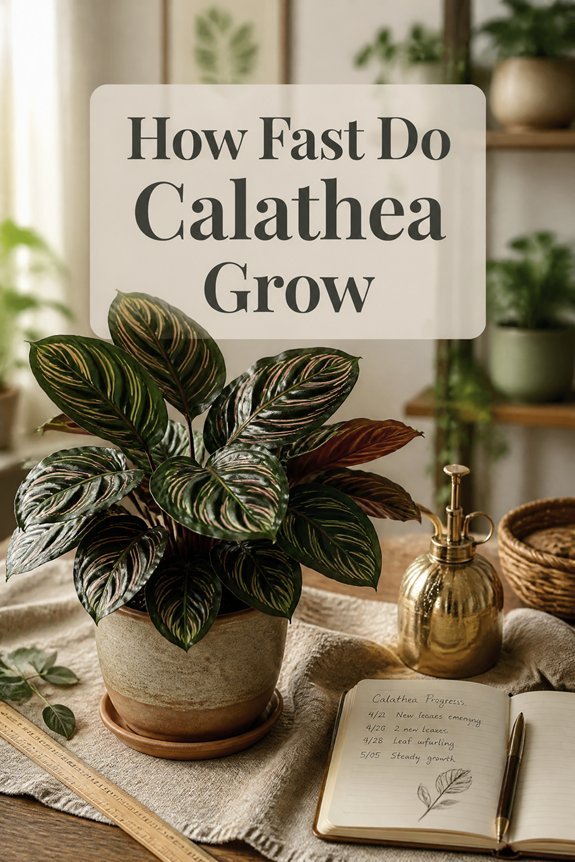
Calathea growth rates vary quite a bit from one variety to another. Some types push out new leaves steadily, while others take their time establishing themselves. It really depends on which species you’re working with and whether their environment matches their tropical preferences.
Take Calathea orbifolia as an example. This stunning variety with its silver-striped leaves usually reaches maturity within two to three years under ideal conditions.
On the other hand, Calathea medallion operates on a slower timeline, often needing three to four years to fully develop its characteristic patterned foliage. Patience becomes essential with these particular plants.
Then there’s Calathea lancifolia, the rattlesnake plant, which tends to be more enthusiastic about growth than its medallion relatives.
Light quality, humidity levels above fifty percent, and consistent watering routines all play major roles in determining pace. Even slight changes in these factors can mean the difference between a plant that flourishes and one that seems frozen in place.
How Fast Do Different Calathea Varieties Grow?
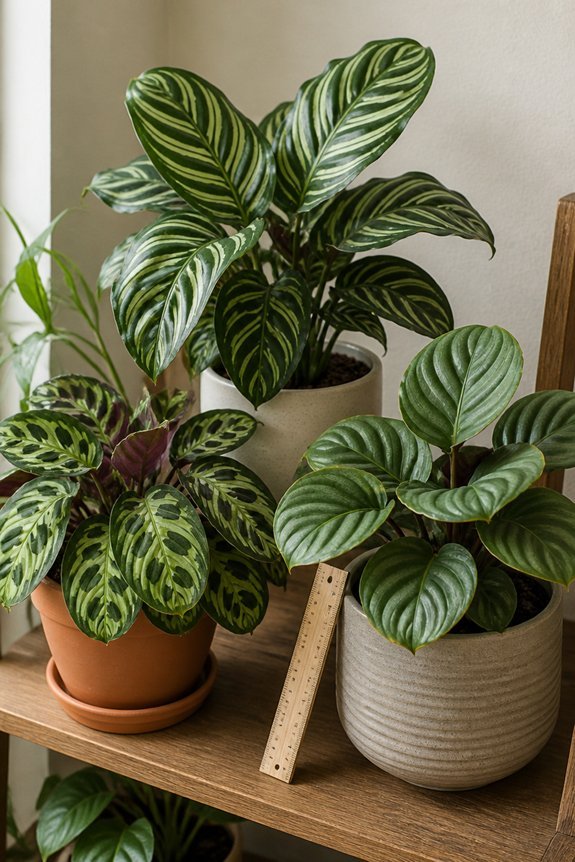
Some Calathea varieties simply grow faster than others. It comes down to their genetics and what conditions they prefer.
Take Calathea orbifolia with its round, silvery-green leaves. It grows at a moderate pace and usually matures in two to three years. Calathea medallion moves more slowly. Its oval, patterned foliage needs three to four years to reach full size. Meanwhile, Calathea lancifolia, the rattlesnake plant, outpaces the medallion varieties with noticeably quicker growth.
Your care routine matters just as much as the variety you choose. Bright, indirect light speeds things up. Dim corners slow everything down. Consistent humidity and well-draining soil help plants expand faster. Neglect has the opposite effect.
Even two plants of the same type can grow at different rates. Care consistency and growing conditions create these differences.
Also read: Do Indoor Plants Need Drainage Holes
Why Lighting Matters Most for Calathea Growth
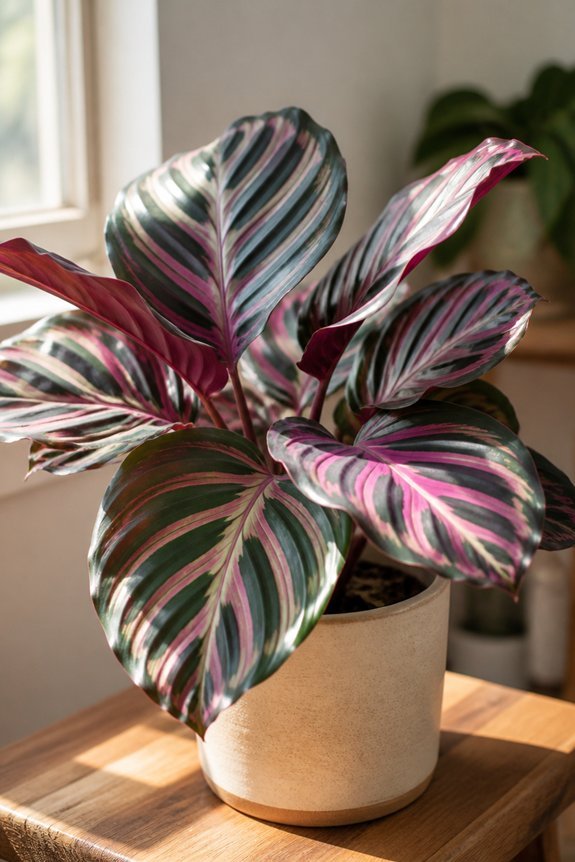
Light is the make-or-break factor for your Calathea. Get it right, and you’ll watch new leaves unfurl regularly with bold, crisp patterns. Get it wrong, and growth stalls while colors dull.
These tropical natives crave bright, indirect light. Think of the dappled sun filtering through a rainforest canopy. An east or north-facing window hits the sweet spot. Morning light is gentle and welcoming. Harsh afternoon rays? Not so much.
Low light corners spell trouble. Your Calathea will linger, staying small and pale with weak roots. Direct sun burns the leaves and bleaches out those gorgeous markings. Each variety suffers the same fate, from orbifolia to roseopicta.
The payoff for proper placement is real. Filtered light fuels steady photosynthesis. Energy flows to new growth. Leaves grow fuller and colors deepen. You’ll notice the difference in weeks, not months.
How Do Humidity and Watering Speed Growth?
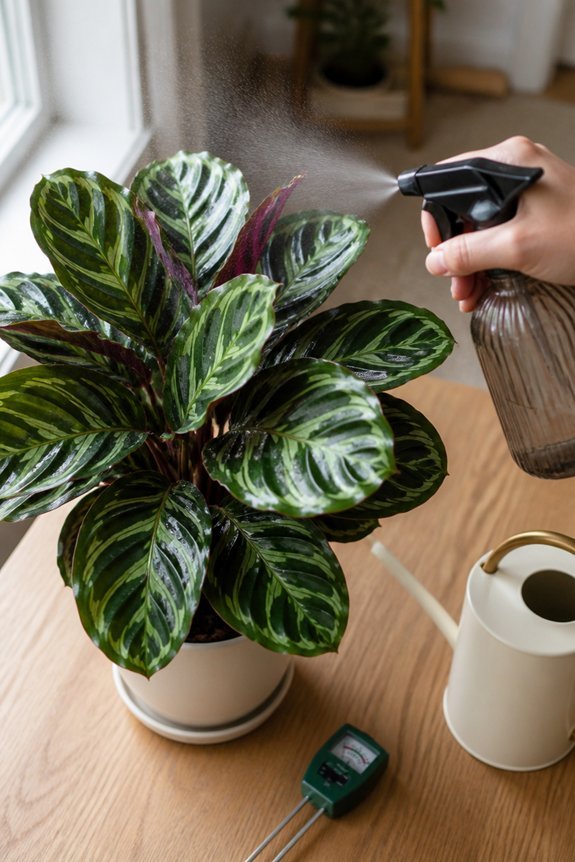
Humidity and water are the two biggest growth boosters for your Calathea once lighting is sorted. These plants love moisture in the air. Shoot for 50-80% relative humidity if you can.
Dry air isn’t kind to them. You’ll spot trouble when leaf edges start turning brown. Growth slows way down too. A quick fix? Mist your plant twice a week. Or cluster several plants together. They’ll create their own little humid microclimate.
Watering needs some balance. Calathea likes soil that’s moist but never soggy. Let it dry out too much and nutrient uptake suffers. Photosynthesis takes a hit. You’ll see slower growth above ground.
Too much water is just as bad. Root rot sets in fast and recovery is tough. Use filtered or distilled water when possible. Tap water minerals can build up and choke the roots over time.
Get these two factors right and your Calathea will reward you with fresh leaves and vibrant growth.
Why Your Calathea Grows Faster in Some Seasons
Your Calathea feels the seasons just like you do.
Light, temperature, and humidity shift throughout the year. These changes tell your plant when to speed up and when to slow down.
Spring and summer bring longer days and steady warmth. Your Calathea responds with a growth spurt. Leaves unfurl faster. Stems stretch toward the light. The plant is busy building itself up.
Then autumn arrives. Days shorten. Nights cool. Growth naturally tapers off. Many Calatheas settle into a quieter state. They need less water now. Skip the fertilizer too.
Indoor placement matters here. A Calathea near a bright window notices seasons more sharply. One tucked under grow lights stays more consistent year-round.
Watch your plant. It will show you what it needs. Ramp up care when new leaves appear. Pull back when growth stalls. Simple as that.
Why Does Your Calathea Stop Growing?
Your Calathea has gone quiet. No new leaves unfurling, no stems reaching upward. Something’s holding it back.
Light is usually the first suspect. These plants crave bright, indirect sun. Too dim, and photosynthesis sputters. Growth simply pauses.
Humidity matters just as much. Calatheas hail from steamy tropics. Your home at 30% humidity? That’s desert air to them. They want 50% or higher to truly thrive.
Temperature swings trigger stubborn dormancy. Keep them cozy between 65-75°F. A cold draft from a window or AC vent can shut everything down.
Check your watering habits too. Soggy roots rot and can’t feed the plant. Bone-dry soil stresses it equally. Both extremes stall new growth.
Nutrients run low over time. Nitrogen, phosphorus, potassium deplete. Your Calathea literally runs out of fuel.
Don’t overlook tiny invaders. Spider mites and mealybugs sap strength silently. Weak, damaged leaves can’t support fresh growth.
Start with light and humidity. They’re the usual culprits. Adjust one thing at a time, and watch for that first hopeful new leaf.
Seasonal Care Adjustments for Optimal Growth
Calathea care isn’t static. Your plant’s needs shift as the seasons change, and tuning into these rhythms keeps it thriving.
Spring and summer kick growth into high gear. Water more often now. Your plant also craves brighter indirect light during these months. A gentle feeding every two to four weeks gives it the fuel to push out new leaves.
Come fall, growth begins to ease. Winter slows things down even further. Cut back on watering since soil stays moist longer. The goal is moist, never soggy.
Keep temperatures steady between 65 and 75 degrees year-round. Drafts are your enemy here. Humidity matters in every season, though heated indoor air in winter can parch the leaves. A pebble tray or nearby humidifier helps.
Small adjustments throughout the year prevent stress. Your Calathea rewards this attention with steady, healthy growth and those signature patterned leaves you love.
When to Expect Your Calathea to Reach Mature Size
Your Calathea will find its mature stride within two to three years. That’s the sweet spot for most varieties under steady care.
The orbifolia and roseopicta usually settle at 12 to 24 inches tall by then. Not towering, but beautifully full.
Several things nudge that timeline along. Bright indirect light matters. So does humidity at 50% or above. Regular watering and light feeding during spring and summer keep momentum going.
Indoor plants take their time compared to outdoor ones. Controlled spaces simply slow things down.
You’ll notice young plants pushing out new leaves each month. That visible progress feels rewarding. Mature plants shift gears and focus on leaf quality instead of height. Watch for fresh foliage and firm stems. Those tell you everything is on track.
Growth after year two tends to level off. That’s normal, not a problem. These tropical natives prefer a gentle pace, and that patience pays off in lush, lasting beauty.
Frequently Asked Questions
Can I Propagate Calathea From Cuttings, and How Long Does It Take?
Calathea cannot be reliably propagated from cuttings. Instead, growers should divide mature plants at the rhizome during spring repotting. Division typically establishes new plants within several weeks, making it the preferred propagation method for this species.
What Fertilizer Should I Use to Encourage Faster Calathea Growth?
Using a telegraph to communicate plant care advice, one should apply a balanced, water-soluble fertilizer monthly during growing season. A 10-10-10 NPK ratio works well. Alternatively, diluted liquid fertilizer every two weeks promotes faster Calathea growth without burning delicate roots.
Does Repotting Frequency Impact How Quickly My Calathea Grows?
Repotting frequency greatly impacts Calathea growth rates. Frequent repotting into larger containers provides fresh soil and expanded root space, promoting faster development. However, excessive repotting can stress plants. Experts recommend repotting annually during spring for ideal growth.
Are There Pests That Stunt Calathea Growth, and How Do I Prevent Them?
Yes, spider mites and mealybugs stunt calathea growth by weakening plants. Prevention involves maintaining humidity above 50%, inspecting leaves regularly, isolating infested plants, and using neem oil spray when necessary to protect healthy specimens.
Can I Use Growth Hormones to Accelerate My Calathea’s Development?
Like a musician forcing an instrument beyond its design, applying growth hormones to calathea risks damage. While technically possible, it’s unnecessary. Calathea thrives with proper light, humidity, and fertilizer. Natural growth proves healthier than artificially accelerated development.
Conclusion
Calathea cultivators can comprehend that consistent conditions—bright, indirect light; balanced humidity; and basic care—buttress better growth. Different varieties develop at distinct rates, from orbifolia’s two-to-three-year timeline to medallion’s measured maturation. Seasonal shifts greatly slow or speed growth spurts. Properly positioned plants, persistently provided proper conditions, predictably produce full-sized specimens. Understanding these particulars permits plant parents to prognosticate realistic results regarding their Calathea’s development trajectory.