
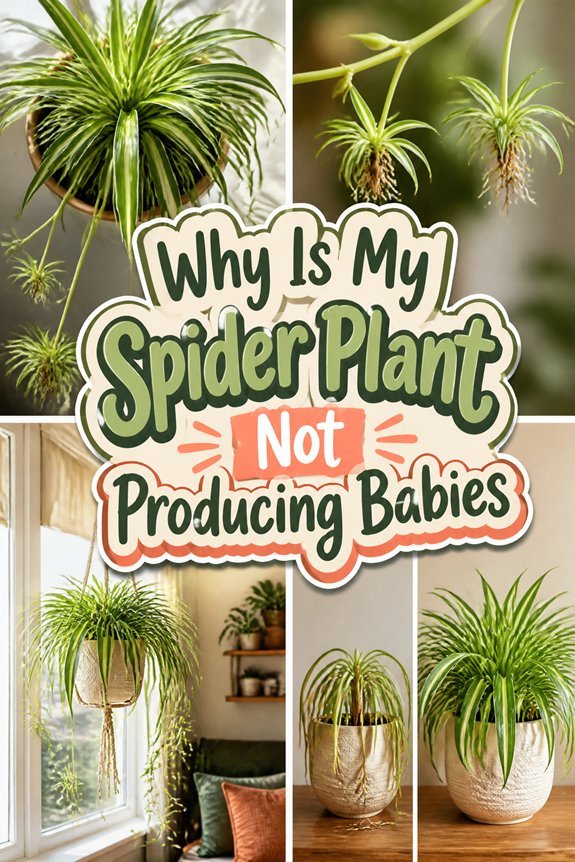
Spider plants are famous for their cascading babies, yet many owners find themselves waiting in vain for those telltale runners to appear. Even when the foliage looks lush and green, something behind the scenes can quietly stall reproduction.
Light that seems bright to our eyes often falls short of what these plants actually need. Weak, indirect sun leaves them stuck in survival mode, too energy-starved to invest in offspring.
Meanwhile, soggy roots from overwatering trigger a similar stress response, convincing the plant that conditions are too risky for propagation.
Temperature swings and dry air add to the problem, as spider plants prefer steady warmth and moderate humidity.
Young plants need time to mature before reproducing, and older specimens sometimes pause during natural dormancy periods. A missing nutrient, particularly phosphorus, can also leave the plant unable to complete its reproductive cycle.
Pinpointing the specific limitation matters more than trying random fixes. Once the true obstacle is identified, adjusting care becomes straightforward and the characteristic spiderettes eventually emerge.
Why Spider Plant Babies Appear (And When Yours Should)
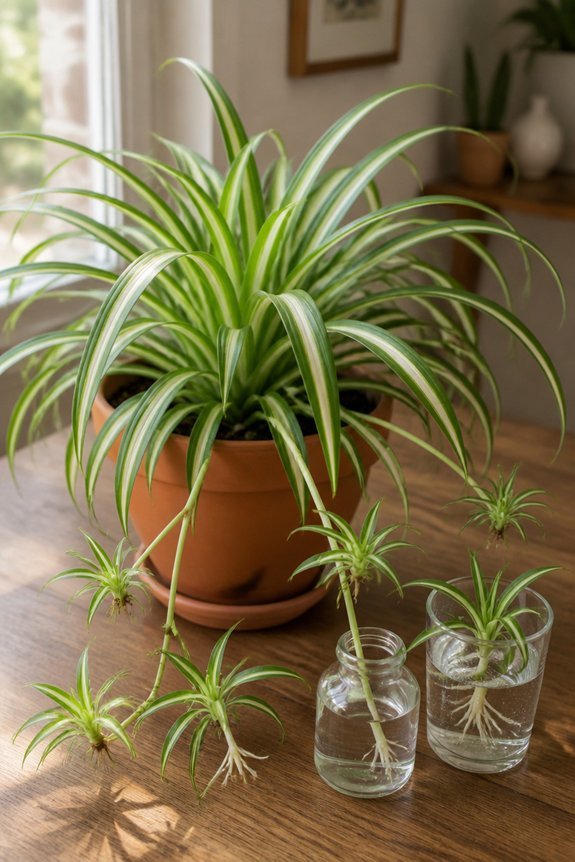
Spider plants naturally grow babies called plantlets or runners. These pop up when your plant is happy and thriving.
Most spider plants start producing babies once they hit one to two years old. Younger plants usually need more time to mature first.
Good light matters a lot here. Aim for bright, indirect light for about twelve to sixteen hours daily. Keep temperatures steady between 65 and 75 degrees Fahrenheit. Water consistently and feed your plant properly. These simple steps encourage baby production.
Spring and summer are prime time for new plantlets. Indoor plants with stable conditions might surprise you with babies year-round. Stressed or hungry plants stop producing until you fix their setup. Check your watering, light, and fertilizer if you notice no new growth.
Also read: Why Is My Indoor Plant Soil Not Drying
Light: The #1 Trigger for Runner Production
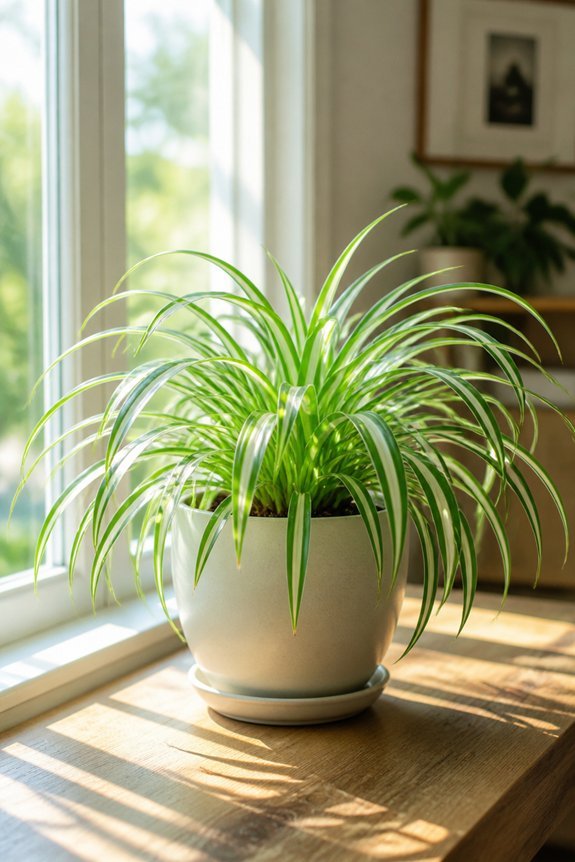
Light drives runner production more than anything else. Temperature, water, and feeding all matter, but nothing beats good lighting.
Spider plants need bright, indirect light for six to eight hours daily. This triggers flowering, which leads to those baby spiderettes. North-facing windows usually disappoint. Your plant sits there looking pretty but produces almost nothing. East or west-facing windows change everything. Suddenly you have runners everywhere.
Direct afternoon sun causes trouble. Leaves scorch and turn brown at the tips. Yet too little light stops runner formation completely. You will get a leafy plant with no babies.
Fluorescent grow lights work well when windows fail. Place them twelve to eighteen inches above the foliage. This setup keeps production going through darker months.
Seasonal changes naturally affect your plant. Longer days in spring and summer boost growth significantly. Watch how your windows perform throughout the year. Move your spider plant as needed to keep those runners coming.
Overwatering and Low Humidity: The Baby-Blocking Duo
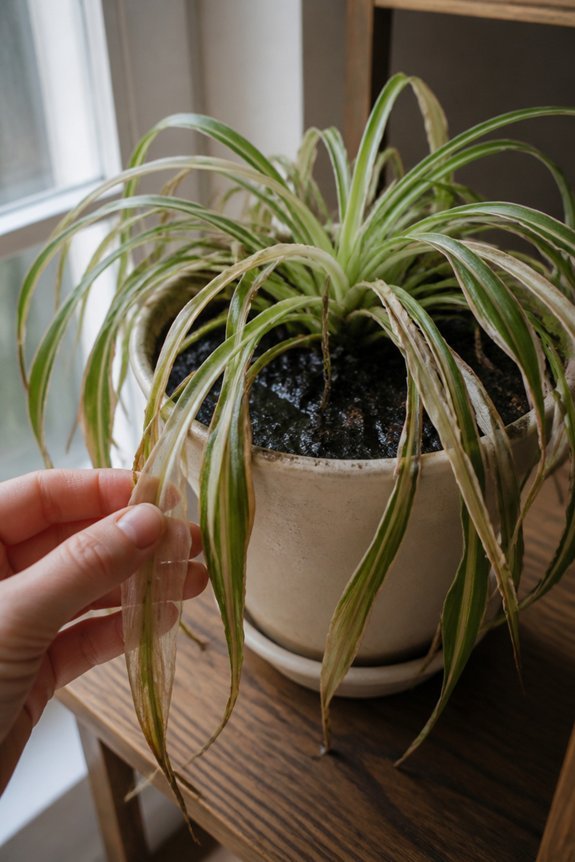
Light gets the credit, but two sneaky problems steal the spotlight: overwatering and low humidity.
Wet feet spell trouble for spider plants. Soggy soil triggers root rot. That weakens the whole plant. Suddenly, making babies drops to the bottom of its to-do list. These plants like their soil on the drier side. Let it dry out between drinks, and you’ll keep the roots happy.
Dry air causes just as much trouble. Spider plants prefer humidity around 50-60%. Winter heating often crashes indoor levels below 30%. The plant feels the stress. It hoards resources instead of sharing them with new runners.
Fixing this is straightforward. Check the soil before watering. Wait until it feels slightly dry. For humidity, mist the leaves now and then. A pebble tray works too. Just set the pot above water-filled pebbles. Small changes add up. Your plant will notice the difference.
Nutrient Hunger: Why Fertilizer Matters for Runners
Your spider plant’s water and humidity are sorted. Now comes the fun part. Nutrition.
These plants get hungry during spring and summer. That’s when they’re busy making babies. A balanced 10-10-10 fertilizer does the trick nicely. Just dilute it well and feed monthly. Light feeding beats occasional heavy doses every time.
Watch for trouble signs. Yellow leaves? Weak stems? Fewer runners? Your plant is asking for help. Running on empty drains their reserves fast. Reproducing takes serious energy. Baby plantlets need fuel.
Indoor plants have it rougher than outdoor ones. Limited soil means nutrients vanish quickly. No natural cycling happens in a pot. Regular meals keep your spider plant lush and productive. Foliage stays full. Runners keep coming.
Temperature and Dormancy: How Seasons Affect Baby Growth
Spider plants need a proper winter chill to get in the mood for making babies. Think of it as their version of a cozy hibernation. Temperatures around 50-60°F signal the plant to slow down and start producing runners.
Without that cool period, your plant might just keep growing leaves indefinitely. Many indoor spider plants skip reproduction entirely because our homes stay too warm year-round. A slight nighttime drop of 10-15 degrees can work wonders. Even small temperature shifts mimic the seasonal changes these plants crave.
Spring and fall naturally bring the warm days and cool nights that trigger runner growth. Summer heat tends to slow things down, while winter cold kickstarts the whole process. If your plant sits near a heating vent, it might need a cooler spot to wake up its reproductive instincts.
5 Proven Ways to Trigger Runner Production
Bright, indirect light works best for triggering runners. Your spider plant will flower and send out runners faster than it would in dim corners. Keep temperatures steady between 60-75°F for active growth. A cooler winter period actually signals the plant to start its reproductive phase.
Feed your plant monthly during spring and summer. Pick a fertilizer higher in phosphorus to really boost flower and runner production. Keep the soil evenly moist but never soggy. Stressed plants simply won’t bother with reproduction.
Mature plants over a year old are your best bet for abundant runners. Let the roots fill most of the pot too. Slightly tight conditions often spark that flowering response. You can also speed things along by propagating from existing runners. Root division gives established plantlets a head start on producing their own.
How Old Should Your Spider Plant Be to Make Babies?
Spider plants usually start making babies between 12 and 18 months old. Some take up to two years to produce their first runners.
A few things affect this timing:
- How big and healthy your plant is
- Light and temperature conditions
- Nutrients in the soil
Young plants put all their energy into growing roots, stems, and leaves. They simply aren’t ready to reproduce yet.
Once mature, healthy spider plants send out runners regularly. This happens during spring and summer when they’re actively growing.
If you just brought yours home, patience helps. Give it good care and it will reach maturity faster. Then those little plantlets will start appearing on their own.
Frequently Asked Questions
Can I Propagate Spider Plant Babies in Water or Soil?
Studies show spider plant propagation succeeds in both mediums. One can place babies in water until roots develop, then transfer to soil, or directly plant them in moist soil. Both methods yield healthy plants within weeks.
What’s the Difference Between Runners and Actual Baby Spider Plants?
Runners are long, thin stems that spider plants produce first. Baby spider plants, or plantlets, develop along these runners with their own leaves and root nodes, making them ready for propagation into independent plants.
How Long Does It Take for Babies to Develop Roots?
Like watching paint dry, patience proves essential when propagating spider plant babies. Typically, roots emerge within one to two weeks when plantlets are placed in water or moist soil. Most growers observe substantial root systems developing within three to four weeks.
Will Spider Plant Babies Grow if Separated Before Developing Roots?
Spider plant babies can grow when separated before roots develop, though success rates are lower. Placing them in water or moist soil encourages root formation. However, waiting until roots naturally develop greatly increases survival rates and establishment speed.
Why Are My Spider Plant Babies Yellowing After Propagation Attempts?
Like delicate ships maneuvering treacherous waters, propagated spider plant babies often yellow from stress-induced shock. Insufficient root development, inconsistent watering, poor drainage, or inadequate light exposure commonly cause this yellowing. Ascertain moist soil, bright indirect light, and proper humidity for successful establishment.
Conclusion
Spider plants require specific conditions to flourish and produce offspring. Adequate light, proper watering, consistent humidity, appropriate nutrients, and suitable temperatures create an environment where runners naturally emerge. When plants experience suboptimal circumstances, their reproductive capacity becomes temporarily suspended. Addressing these fundamental factors—light exposure, moisture balance, and seasonal adjustments—encourages the plant to resume its natural lifecycle and generate the desired plantlets.