
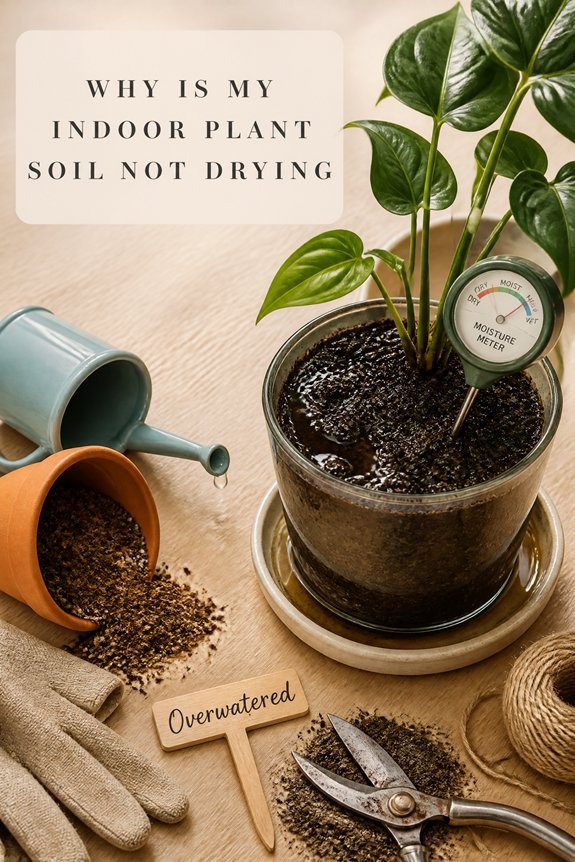
That stubborn damp soil sitting in your plant pot for days isn’t just annoying. It’s usually a warning sign that something’s off in your plant’s environment. Wet feet can quickly lead to root rot, so figuring out the culprit matters more than most people realize.
Several interconnected factors typically cause this moisture problem. Poor drainage and compacted soil create physical barriers that trap water where roots sit. Containers lacking proper drainage holes add to the mess.
Meanwhile, environmental conditions like dim corners, humid rooms, or simply watering too frequently slow down evaporation dramatically.
Pinpointing which factor affects your plant takes a bit of detective work. Check the pot’s bottom first, then examine the soil texture and your watering habits.
Once you identify the real issue, adjustments become straightforward and your plant’s health can recover quickly.
Poor Drainage Is Usually the Culprit
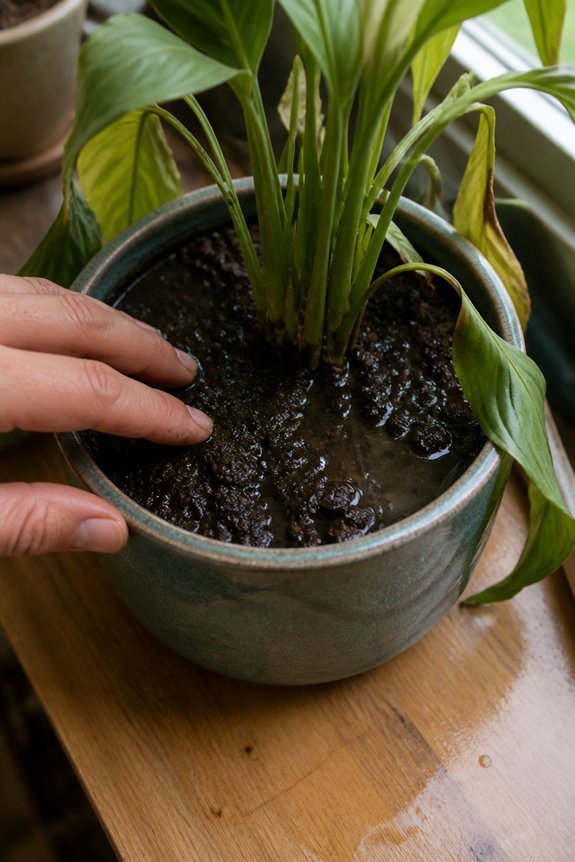
Wet soil kills plants fast. Root rot and fungal diseases thrive when moisture lingers too long. Poor drainage is almost always the reason.
Your soil mix makes a huge difference. Heavy, compacted soil stays soggy. Airy mixtures drain freely. Look for perlite and orchid bark in your potting mix. These create tiny air channels that water can escape through.
Your pot matters just as much. No drainage holes? Water pools at the bottom. Roots suffocate and drown. Terracotta breathes. Plastic and glazed ceramic don’t.
Check both your soil and your container if water never seems to dry out. Switching to a fast-draining mix and a pot with proper drainage usually fixes the problem completely.
Also read: Why Is My Spider Plant Not Producing Babies
Check If Your Soil Is Compacted
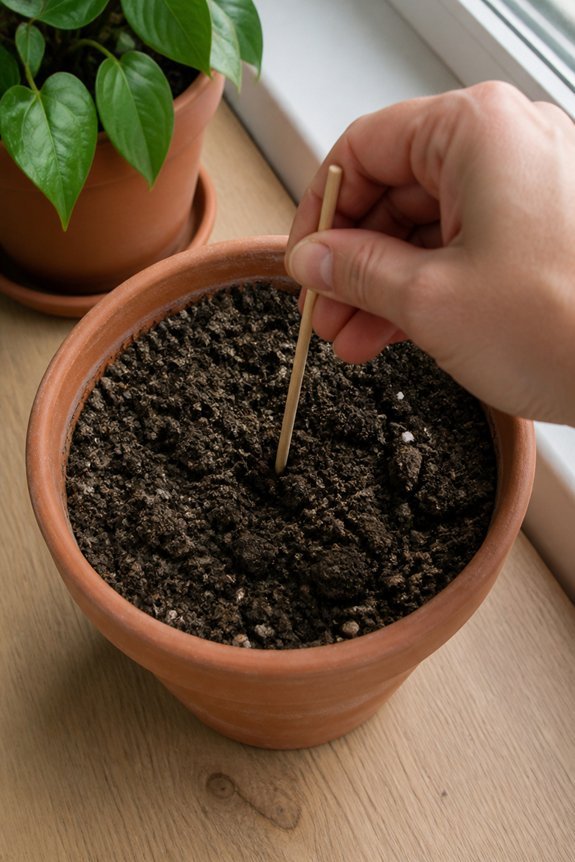
Feel the surface with your finger. Hard soil pushes back. It won’t let you in easily.
Water tells you too. It pools on top instead of sinking in fast.
Look for gaps between the soil and pot walls. Roots struggle to grow deep. The top layer crusts over. Drainage holes clog up.
Wet-dry cycles press particles together. Clay-heavy mixes compact faster than airy blends with perlite or bark.
Press your finger straight down. Quick resistance means trouble. Fresh, loose soil fixes this.
Low Light Slows Evaporation
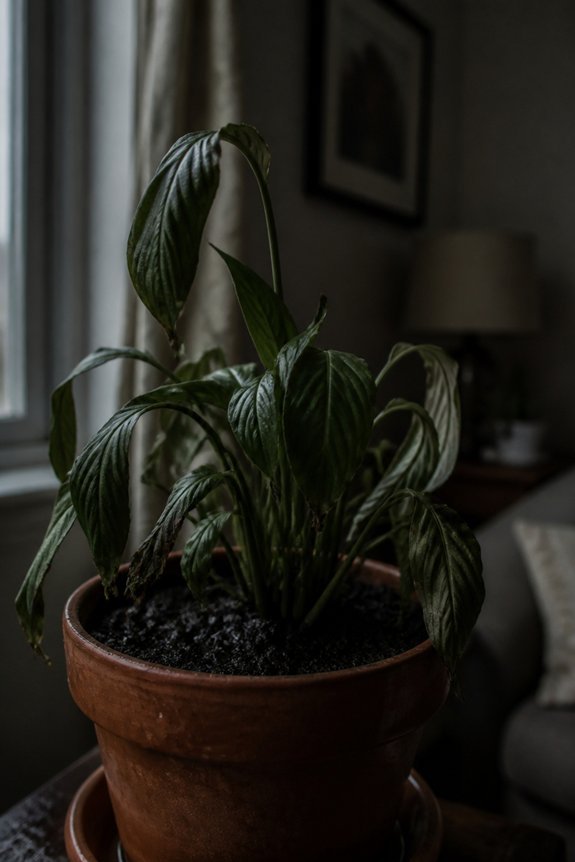
Your plants need light to move water through their leaves. Less light means less photosynthesis. Less photosynthesis means slower water movement. Moisture just sits in the soil when this happens.
Dim corners and windowless rooms make this worse. The air stays cooler there. Cool air holds moisture longer. Your soil stays wet when it should dry out.
Shade-tolerant plants like pothos, snake plants, and ZZ plants still suffer in very low light. They can survive darkness, but they cannot thrive there.
Move your plants closer to windows when you notice wet soil lasting too long. Grow lights work well too. Even small brightness changes help water evaporate faster. This prevents root rot and keeps your plants healthy.
Check your soil before watering. Plants in bright spots need water more often. Plants in dark spots need much less. Match your watering to your light levels, and your plants will thank you.
You’re Watering More Than Your Plant Needs
We get it. Schedules feel safe. Water on Sunday, done.
But plants do not care about your calendar. Soil stays wet. Roots suffer. Fungus moves in.
Pothos, snake plants, philodendrons — they want dry spells. Wet roots rot fast.
Check first. Stick your finger two inches down. Dry? Water. Damp? Wait.
Your plant will tell you what it needs. You just have to listen.
Your Soil Mix Might Be Retaining Too Much Water
Your soil mix might be holding onto water longer than your plants can handle.
Standard potting soil usually contains peat moss, coconut coir, or compost. These materials soak up moisture and keep it there. That is great for some plants. It is not great for succulents, cacti, or anything that likes dry feet.
Dense soils get worse over time. They compact. Water sits around the roots instead of draining away. Root rot follows quickly.
Try this simple check. Water your plant and watch the clock. Soil that stays wet for more than two or three days has poor drainage. Your plant is basically sitting in a swamp.
Fixing it is straightforward. Mix in perlite, coarse sand, or orchid bark. These create air pockets and help water escape. Repot with this lighter blend and your roots will finally breathe again.
High Humidity Traps Moisture Around Roots
Soil fixes only get you halfway. The real culprit? The air itself.
High humidity hits pause on evaporation. When indoor moisture climbs past 60%, water sits stubbornly around roots instead of drifting away. Some plants—pothos, philodendrons, ferns—actually love this. But even they need moving air to dodge root rot.
Try these quick wins:
Run a ceiling fan on low nearby.
Space your pots so air can weave between them.
Set up a dehumidifier in chronically damp rooms.
Crack windows now and then for fresh air.
Grab a cheap humidity meter. You’ll spot if sticky air is keeping your soil soggy. Pair better drainage with improved airflow, and you tackle the problem from both sides.
Repot With Better Soil and Adjust Your Routine
Better soil changes everything. It drains faster. It keeps water from pooling around roots. Your plants get a real shot at avoiding rot.
Old indoor soil gets tight and compact. It traps moisture. It blocks drainage. Fresh, well-draining soil fixes this head-on.
Try peat moss blends or coconut coir mixes. Grab a commercial potting mix made for indoor plants. These let water flow through instead of sitting still. Toss in some perlite or orchid bark for even better drainage.
You’ll need to water differently now. Better soil means new habits. Check the moisture first. Always use pots with drainage holes. Cut back in winter when growth slows. Your roots stay healthier. No more soggy mess.
Frequently Asked Questions
How Can I Tell if My Plant’s Soil Is Permanently Waterlogged or Just Temporarily Wet?
Like a sponge that refuses to release water, permanently waterlogged soil reveals itself through persistent moisture beyond five days, visible mold growth, and a sour smell. Temporarily wet soil dries noticeably within this timeframe without fungal development or odor problems.
Will Adding Perlite or Sand to My Soil Improve Drainage Without Harming My Plant?
Adding perlite or sand improves soil drainage effectively. Perlite is preferable, as it aerates without compacting. Sand may compact over time, potentially worsening drainage. Most plants tolerate perlite amendments well. Mixing 20-30% perlite into existing soil enhances water movement safely.
How Long Should I Wait Between Waterings for Different Types of Indoor Plants?
While succulents thrive on neglect, tropical plants demand consistency. One should water succulents every two to three weeks, whereas ferns and pothos prefer soil remaining consistently moist. Most houseplants benefit from watering when the top inch feels dry.
Can I Use a Moisture Meter to Accurately Determine When to Water My Plant?
Yes, moisture meters provide reliable measurements for determining watering needs. They detect soil moisture levels objectively, helping gardeners avoid both overwatering and underwatering. However, one should combine meter readings with observations of plant appearance and drainage conditions for best results.
What Are the Signs That My Plant Is Suffering From Root Rot Due to Wet Soil?
Like a slowly sinking ship, plants afflicted with root rot display yellowing leaves, wilting despite moist soil, a foul musty odor emanating from the pot, and darkened, mushy roots. Stunted growth and leaf drop follow as the plant deteriorates.
Conclusion
Indoor plant soil fails to dry when drainage, light, humidity, and watering practices work against the plant. Poor drainage holes, compacted soil, and water-retaining mixes create soggy conditions. Low light slows evaporation, while high humidity traps moisture. Addressing these issues separately won’t cut the mustard; plant owners must tackle multiple factors simultaneously. Repotting with well-draining soil, adjusting watering frequency, and improving light exposure work together to restore proper moisture balance.