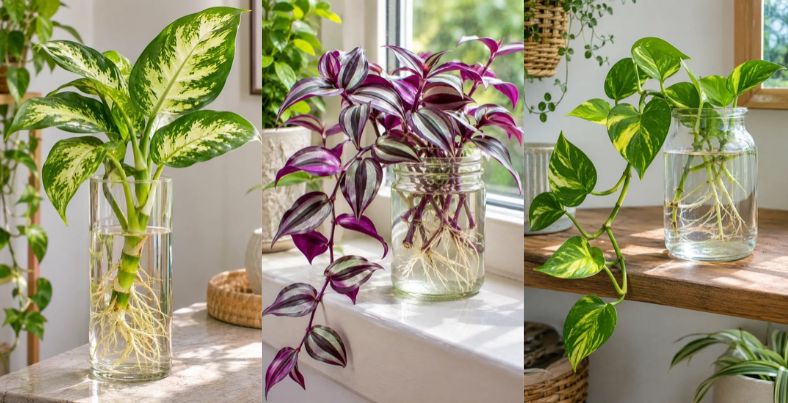
Every houseplant fan has a jar of cuttings on the windowsill. Most of us plan to pot them up “soon,” then notice months later that they’re still growing happily in water. That’s no accident. Plenty of houseplants you can grow in water will keep growing in a vase for a long time, no soil required.
Growing plants in water has real perks. There’s no messy potting mix, no guessing when to water, and you can watch the roots grow through the glass. Stem cuttings root at the nodes, settle into a clear vase in bright indirect light, and with fresh water and a little liquid fertilizer, many keep going for years.
Below are 16 houseplants that grow in water, from easy trailing vines to leafy statement plants and one winter bulb. Each entry covers what the plant looks like, how it does in water, the light it needs and one tip for success. You’ll also find which plants last long term and which do better moved to soil, plus notes on which are safe around pets.
What the Plants on This List Have in Common
Every plant here can root from a cutting or a division and live in a glass of water for months, and many for years. The trailing vines, like pothos, philodendron, arrowhead and Swiss cheese vine, are the easiest long-term growers. Lucky bamboo, Chinese evergreen and dumb cane bring upright shapes and bold leaves. Spider plant and prayer plant are the pet-safe picks, while coleus and begonia do best as shorter-term water plants. Hyacinth adds a winter bulb grown in its own vase. Pick one that suits your light, and start with a single cutting.
1. Golden Pothos (Epipremnum aureum)
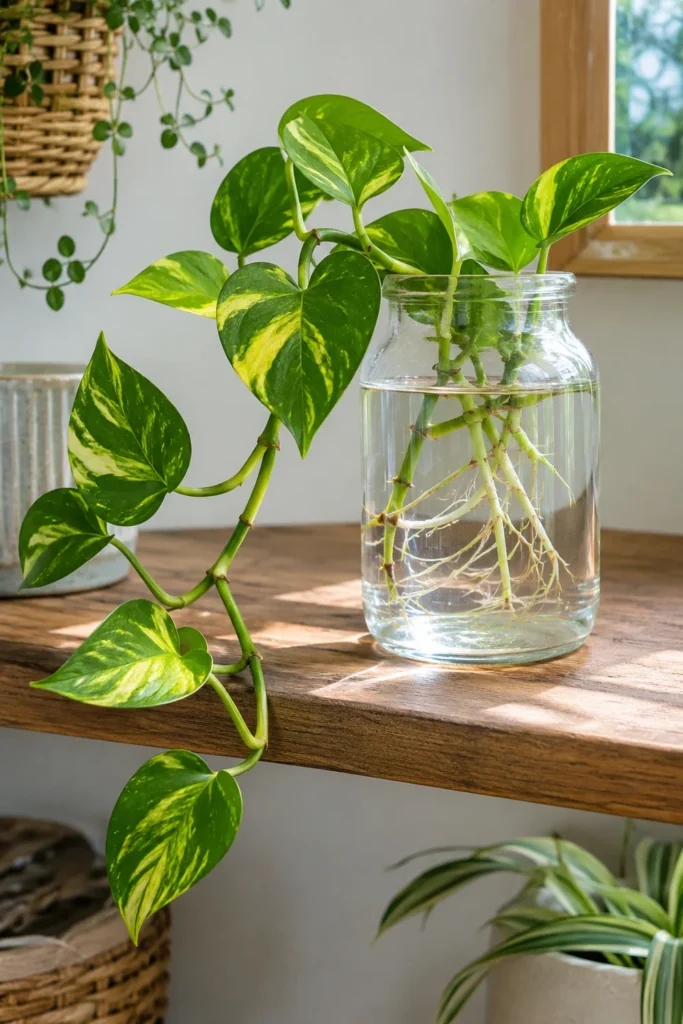
Golden pothos is the easiest houseplant to grow in water, full stop. Its heart-shaped green leaves are splashed with butter yellow, and a single cutting can grow into a long trailing vine spilling out of a glass jar.
It roots readily in a few weeks and keeps growing for years in water, tolerating everything from low light to bright indirect light. Once the roots are a few inches long, add a few drops of liquid fertilizer whenever you change the water. When the vine gets long, take more cuttings and start new jars. Here’s how to propagate pothos step by step.
🌿 Garden Tip
Cut just below a node, the small bump on the stem where a leaf joins. That’s where the roots grow from. Remove any leaves that would sit underwater, so only bare stem and nodes go into the glass. Leaves left in the water rot and cloud it fast.
Pothos is toxic to cats and dogs if chewed.
2. Lucky Bamboo (Dracaena sanderiana)
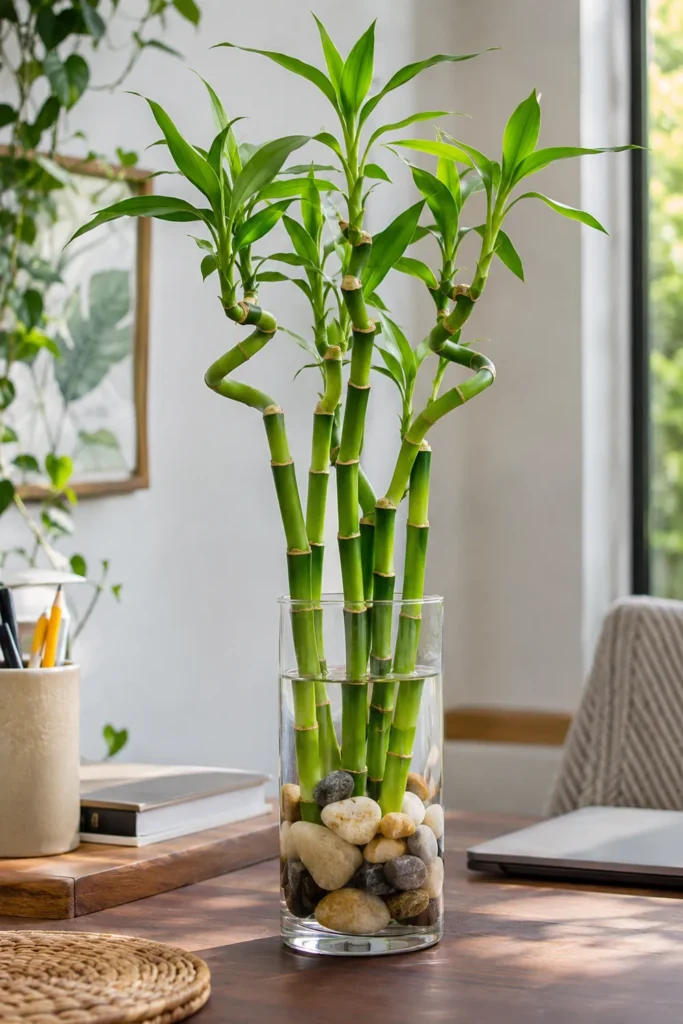
Lucky bamboo isn’t bamboo at all. It’s a dracaena with straight, curled or braided green stalks topped with narrow green leaves. It’s also one of the most popular plants sold to live in water from the start.
It grows happily in a vase of water and pebbles for years, as long as the roots stay covered. It does well in low to medium indirect light, which makes it a natural fit for desks and shelves away from windows. If the leaf tips turn brown, the cause is often chemicals in tap water. Switching to filtered or rain water helps.
Lucky bamboo is toxic to cats and dogs, so keep it where pets can’t chew the leaves.
3. Heartleaf Philodendron (Philodendron hederaceum)
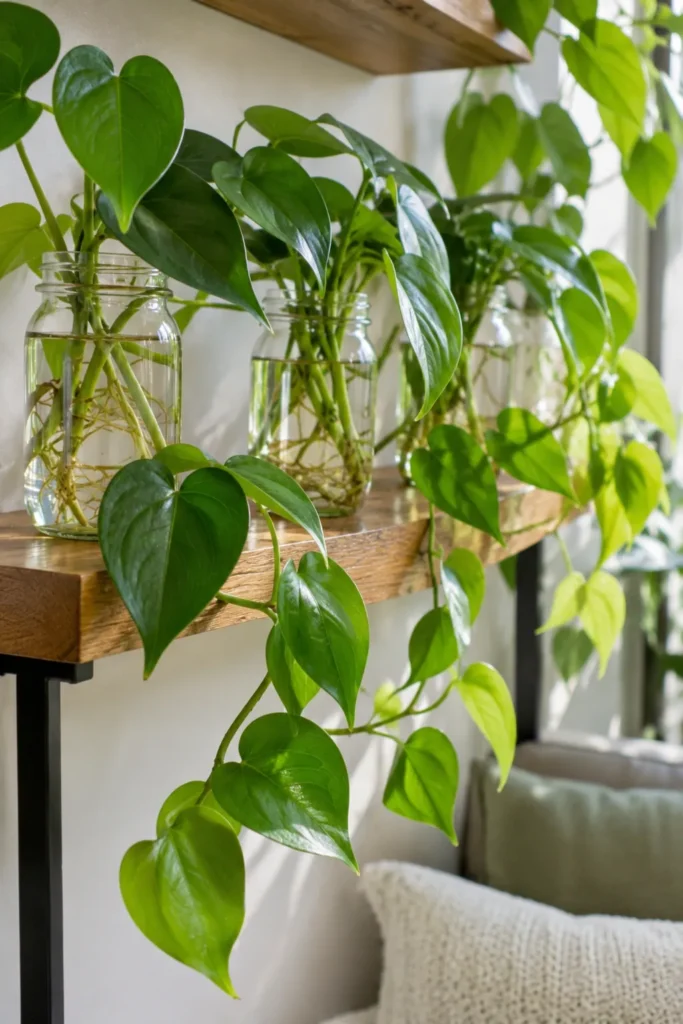
If pothos is the easiest plant to grow in water, heartleaf philodendron is a very close second. Its glossy, heart-shaped leaves trail from slim green stems, and it roots in a glass of water without any fuss.
It’s a light feeder, so it can grow for a long time in water with only occasional fertilizer, and it handles medium to low light well. The deep green, glossy leaves look striking against clear glass, especially when several vines spill from a row of jars on a shelf. For a full answer on long-term growing, see whether philodendron can grow in water.
Trim long vines and root the cuttings to keep the main plant full. Heartleaf philodendron is toxic to pets if chewed.
4. Spider Plant (Chlorophytum comosum)
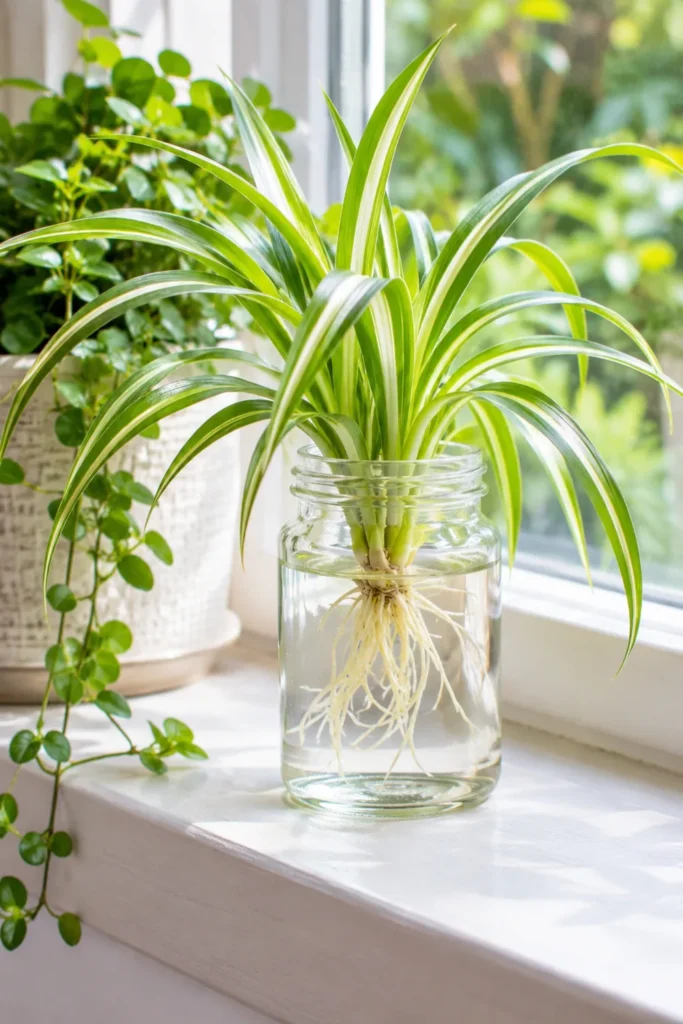
Spider plants practically hand you new plants to grow in water. The arching green-and-white striped leaves send out long runners tipped with baby plantlets, and each one is ready to root.
Snip a plantlet, set its base in a small jar of water with the leaves above the waterline, and roots appear within a week or two. Spider plants grow happily in water with occasional feeding in bright indirect light, or you can move them to soil once roots are established. They’re also widely listed as safe for cats and dogs, which makes them one of the best pet-safe plants that grow in water. If your mother plant isn’t making babies, here’s why a spider plant may not produce babies.
5. Chinese Evergreen (Aglaonema)
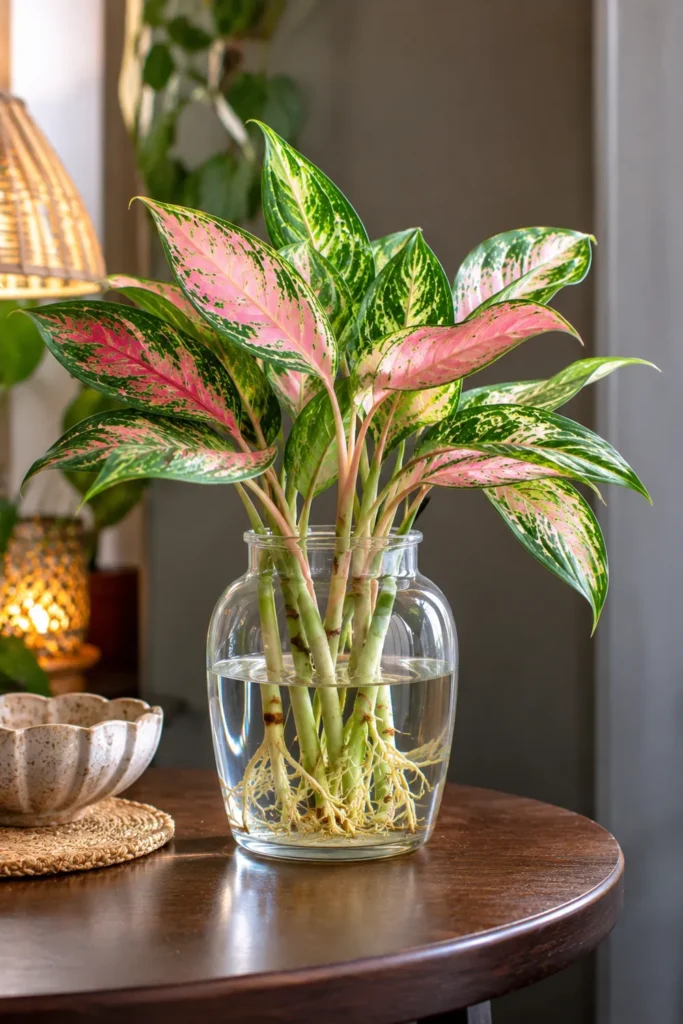
Chinese evergreen brings color to a vase. Its broad, pointed leaves come patterned in silver, green and pink, depending on the type, and they keep their markings even in low light.
Cuttings from the cane-like stems root slowly in water but keep growing for a long time once settled. It’s one of the best water plants for a dim room. Chinese evergreen is toxic to pets if chewed, so keep it on a high shelf if your cat likes to nibble. Good water care keeps any of these plants healthy for the long haul.
Change the water every 2 to 4 weeks and rinse the vase each time.
Feed with a diluted liquid fertilizer once roots form, following the label.
Keep leaves above the waterline and only stems and roots below it.
Hot direct sun on clear glass, which heats the water and feeds algae.
Fertilizing fresh cuttings before they have roots.
Letting water turn cloudy or smelly before changing it.
6. Arrowhead Plant (Syngonium podophyllum)
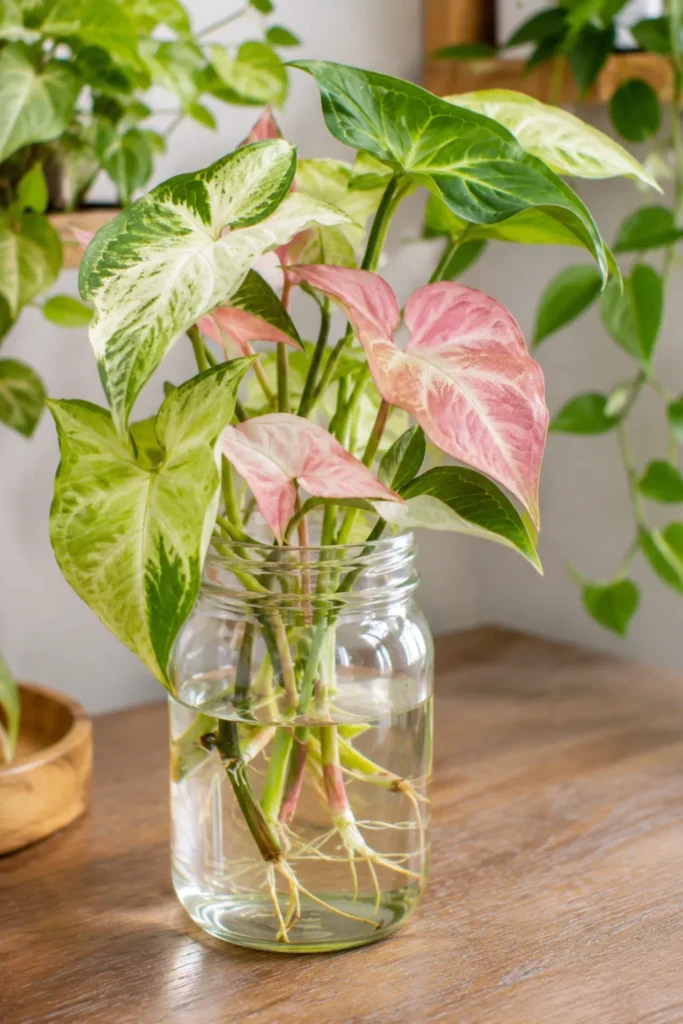
Arrowhead plant changes shape as it grows. Young leaves are neat arrowheads, while older ones split into lobes, and the colors range from green to cream to soft pink.
It roots easily from stem cuttings and grows well in water in medium indirect light. As it matures, it starts to vine, so a vase of arrowhead can go from a compact bunch of leaves to long trailing stems. Pinch back the longest stems to keep it bushy, and pot the trimmings in new jars for a matching set.
Arrowhead plant is toxic to cats and dogs if chewed. Its sap can also irritate skin, so wear gloves when you take cuttings if your skin is sensitive.
7. Inch Plant (Tradescantia zebrina)
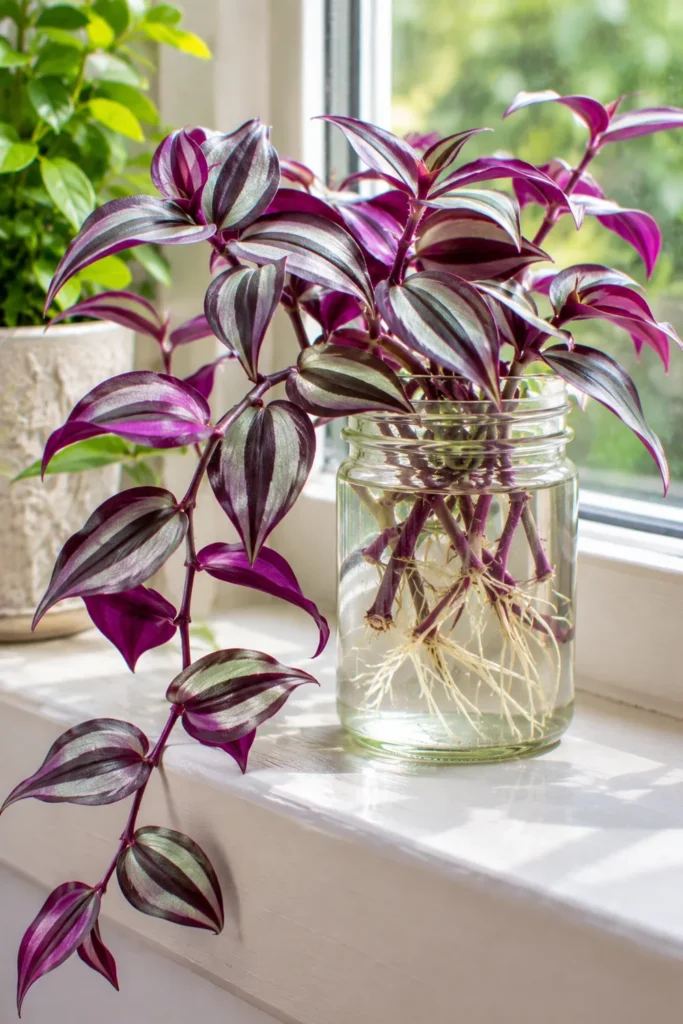
Few plants root faster in water than the inch plant. Cuttings often grow roots within days, and its purple and silver striped leaves shimmer in a clear glass.
It needs bright indirect light to keep that strong purple color. In low light, the stripes fade and the stems stretch out. Inch plant grows quickly, so it can get leggy after a while in water. The easy fix is to take fresh cuttings every so often and start a new jar. That keeps your display full and colorful all year.
Its sap can irritate skin and upset pets if chewed, so keep it out of reach of curious animals.
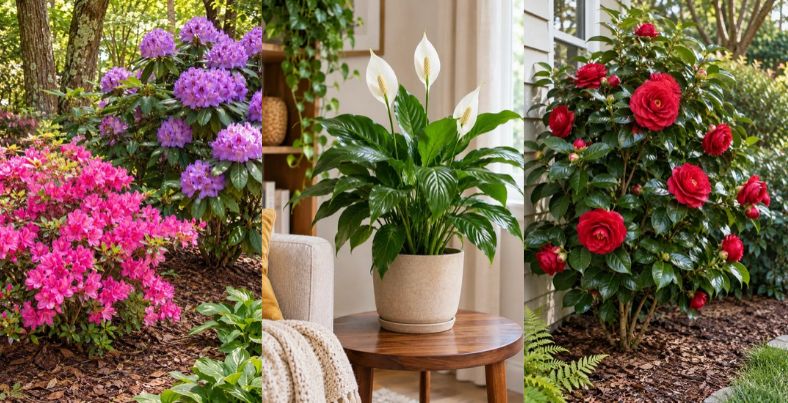
8. Peace Lily (Spathiphyllum)
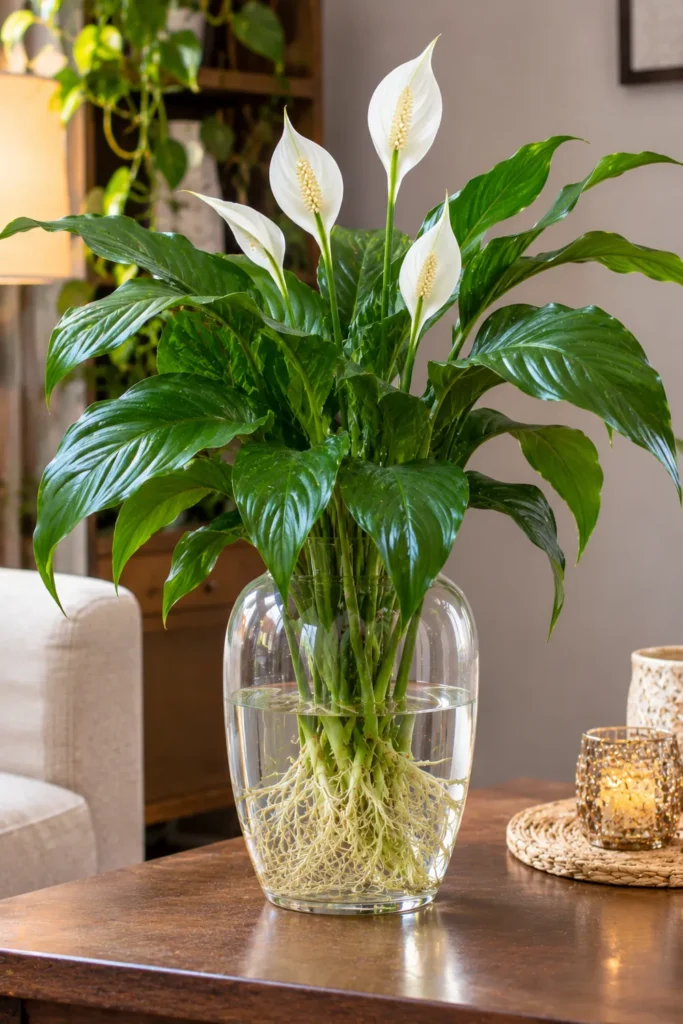
Peace lily can even bloom while growing in water, which few plants on this list manage. Its glossy, dark green leaves and white, sail-like flowers look elegant in a large glass vase.
It takes a little more effort to convert. Gently wash all the soil off the roots, then set the plant so the roots sit in water and the base of the leaves stays above it. Give it low to medium indirect light, change the water regularly and feed lightly. For soil-grown plants, these tips on peace lily care indoors cover the basics.
Peace lily is toxic to cats and dogs if chewed.
9. Swiss Cheese Vine (Monstera adansonii)
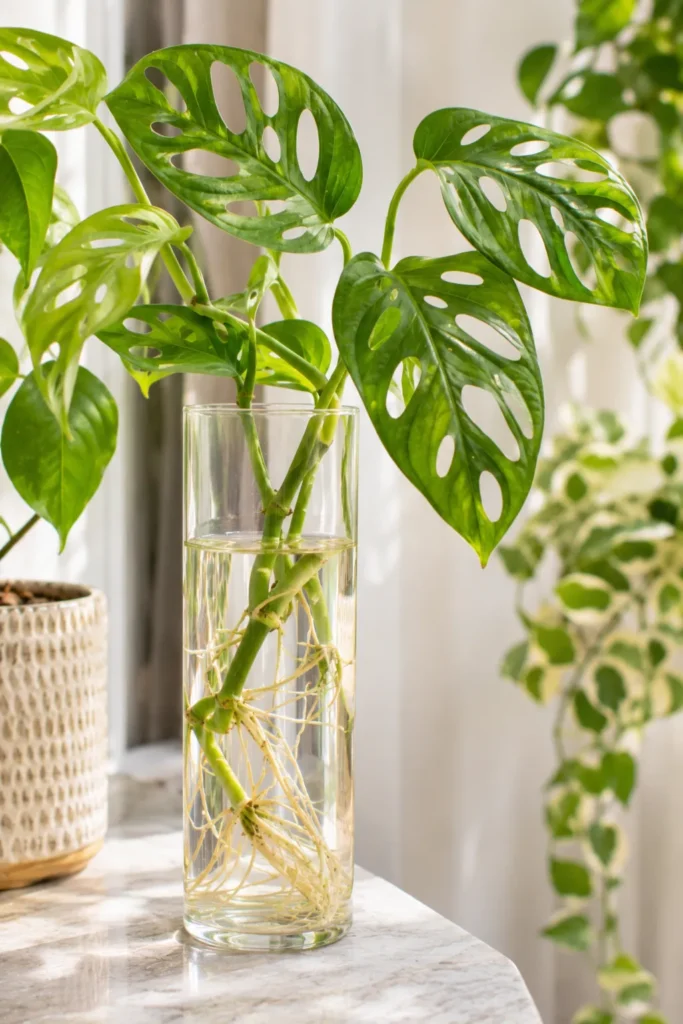
The holes in its leaves are what make Swiss cheese vine so fun to grow in water. Each oval leaf is dotted with natural openings, and a cutting in clear glass shows off both the leaves and the roots below.
Take a cutting with at least one node, since that’s where roots form, and set it in water in bright indirect light. Roots usually appear within a few weeks, and the vine keeps growing well in water with occasional feeding. As it lengthens, it trails or climbs, so a tall vase or a shelf edge suits it best.
Swiss cheese vine is toxic to pets if chewed.
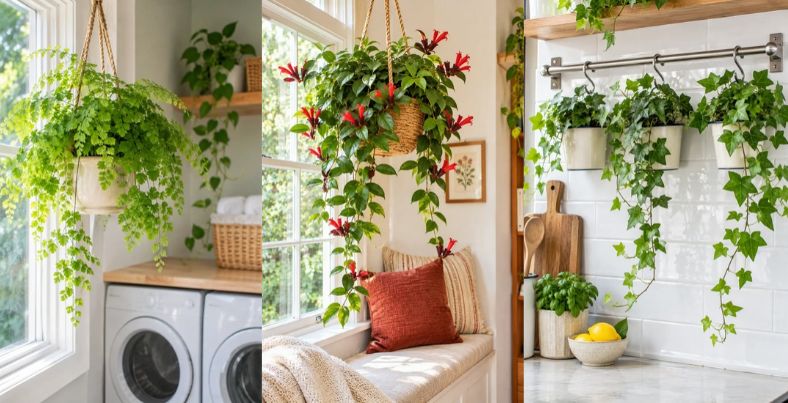
10. English Ivy (Hedera helix)
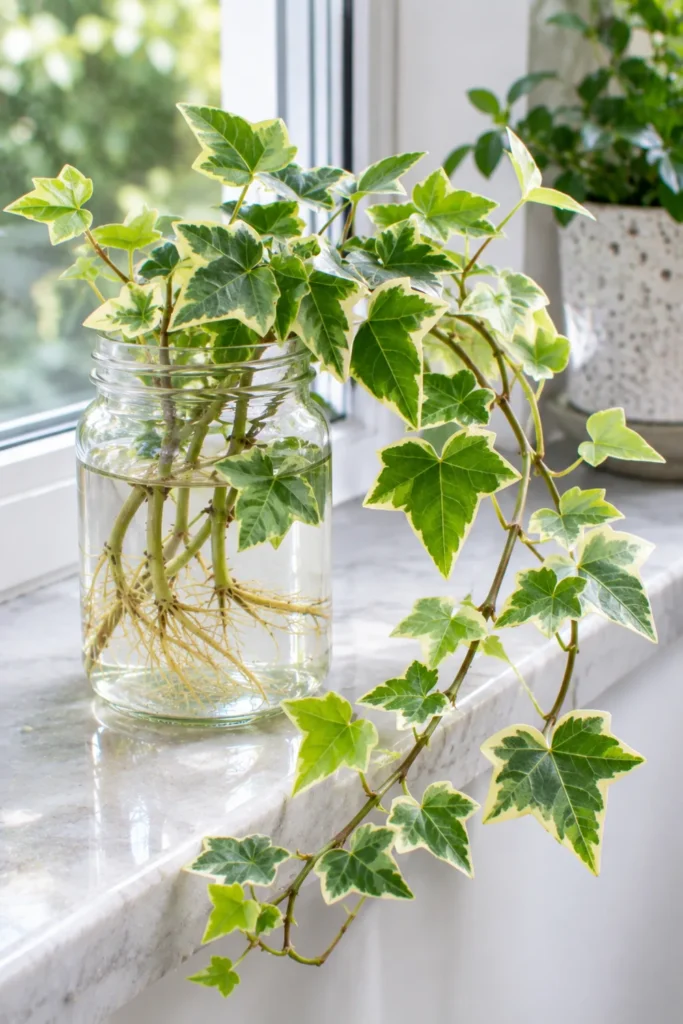
English ivy looks classic trailing from a glass jar, with pointed, lobed leaves in deep green or variegated with cream and silver. Cuttings root easily in water and grow into long, graceful strands.
It likes bright indirect light and slightly cooler rooms, away from heaters and hot, dry air. In warm, dry rooms, ivy can attract spider mites, so rinse the leaves under the tap now and then. Grown in water, it makes a neat, mess-free version of a plant that can be fussy in soil.
English ivy is toxic to pets if eaten. It’s also invasive outdoors in parts of the US, so keep it as a houseplant.
11. Coleus (Coleus scutellarioides)
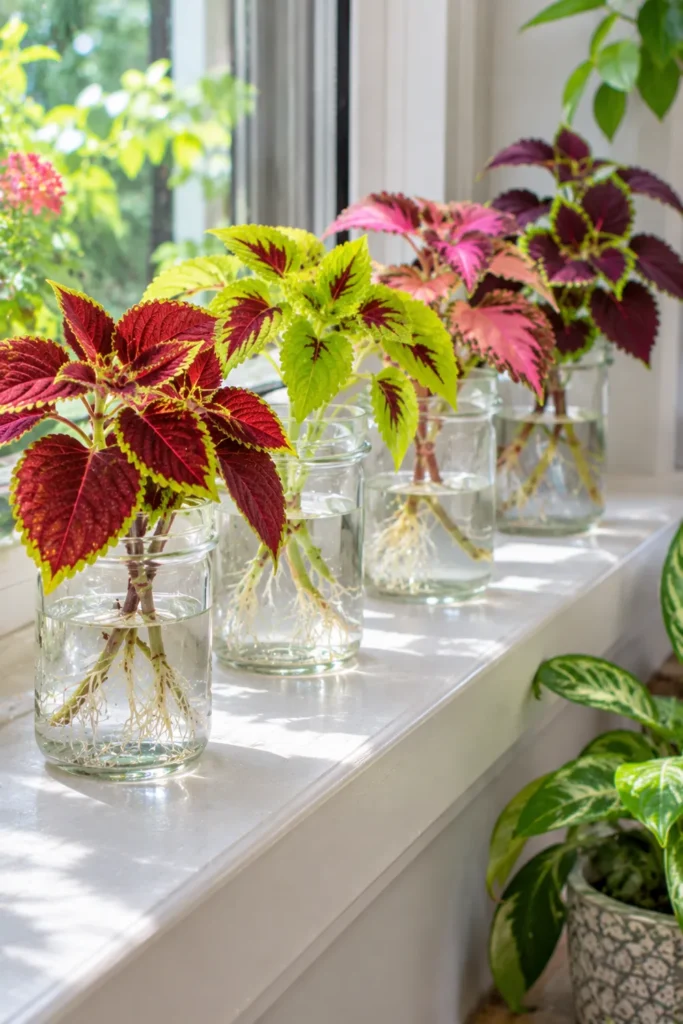
Coleus brings more color to a glass of water than any other plant on this list. Its leaves come in bold mixes of red, lime, burgundy, pink and gold, often with ruffled or scalloped edges.
Cuttings root very quickly, sometimes within a week, and look stunning lined up in jars on a bright windowsill. Coleus is a shorter-term water plant, though. After a few months, it tends to get leggy and weak in water, so either pot the rooted cuttings in soil or keep taking fresh cuttings. That makes it a great plant for sharing. These ideas for gifting plant cuttings show how to package them.
Pinch off flower spikes as they appear to keep the leaves full. Coleus is listed as toxic to cats and dogs.
Long-Term vs Short-Term Water Plants
Examples: pothos, heartleaf philodendron, lucky bamboo, spider plant, Chinese evergreen, arrowhead, Swiss cheese vine.
Keep in mind: they can grow for years with fresh water and light feeding.
Examples: coleus, begonia, and hyacinth as a one-season bulb.
Keep in mind: root them in water, then move them to soil or start fresh cuttings after a few months.
12. Dumb Cane (Dieffenbachia)
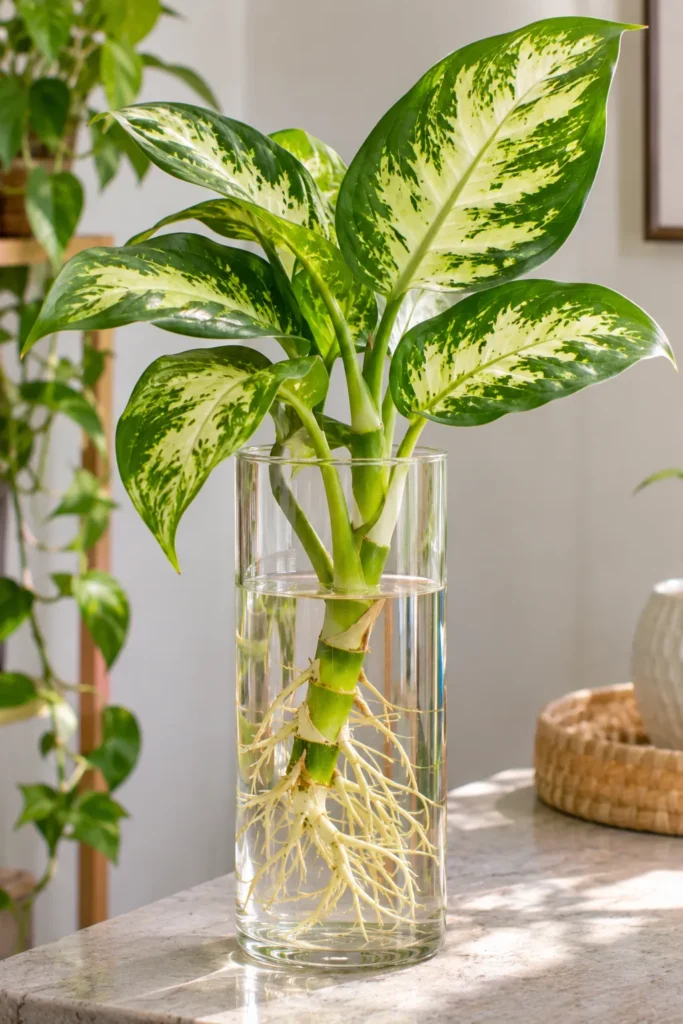
Dumb cane has some of the biggest, boldest leaves you can grow in water. They’re broad and pointed, splashed with cream, white or pale green, and a single cane cutting can grow into a striking vase plant.
To start one, cut a section of the thick stem with a few nodes and stand it in water, or lay a short piece on its side in a shallow dish. Roots form slowly, but once growing, it does well in medium indirect light.
Handle it with care. Dumb cane sap can cause painful swelling of the mouth and throat in people and pets if chewed, which is where the name comes from. Wear gloves when cutting it, and keep it well away from children and pets.
13. Prayer Plant (Maranta leuconeura)
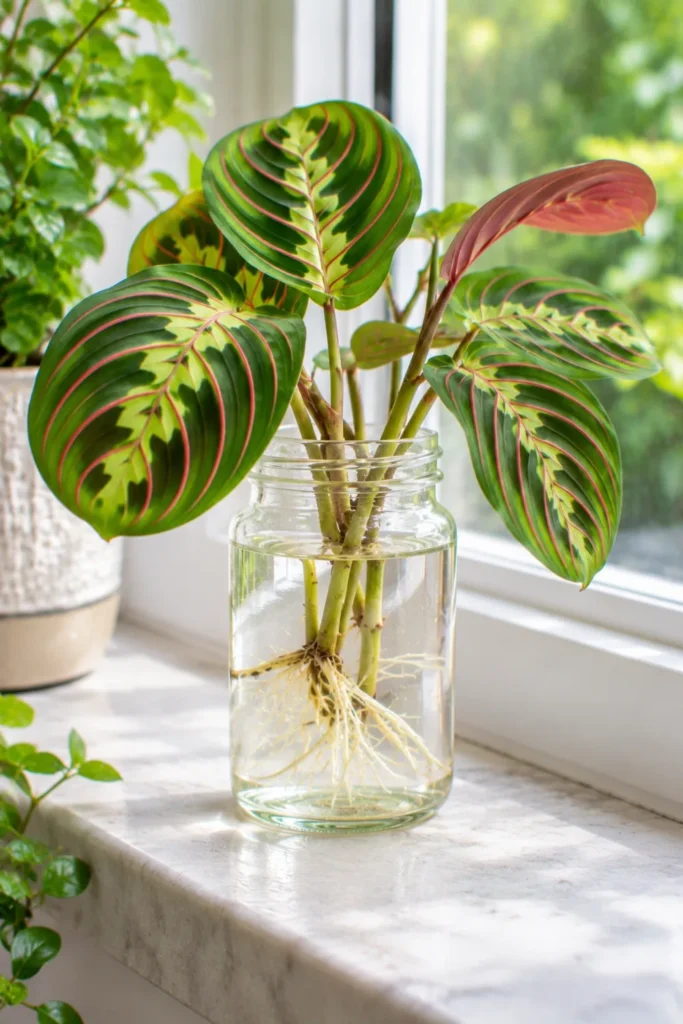
Prayer plant puts on a little show every evening. Its oval leaves, marked with red veins and dark green blotches, fold upward at night like hands in prayer, then open again in the morning.
Cuttings with at least one node root in water and grow well in medium indirect light. Prayer plant can be sensitive to minerals in tap water, which may cause brown leaf tips, so filtered or rain water helps keep the leaves clean. It also likes humidity, so a kitchen or bathroom with a bright window suits it well.
Prayer plant is widely listed as safe for cats and dogs, which makes it, along with spider plant, one of the best picks for pet homes.
14. Monstera (Monstera deliciosa)
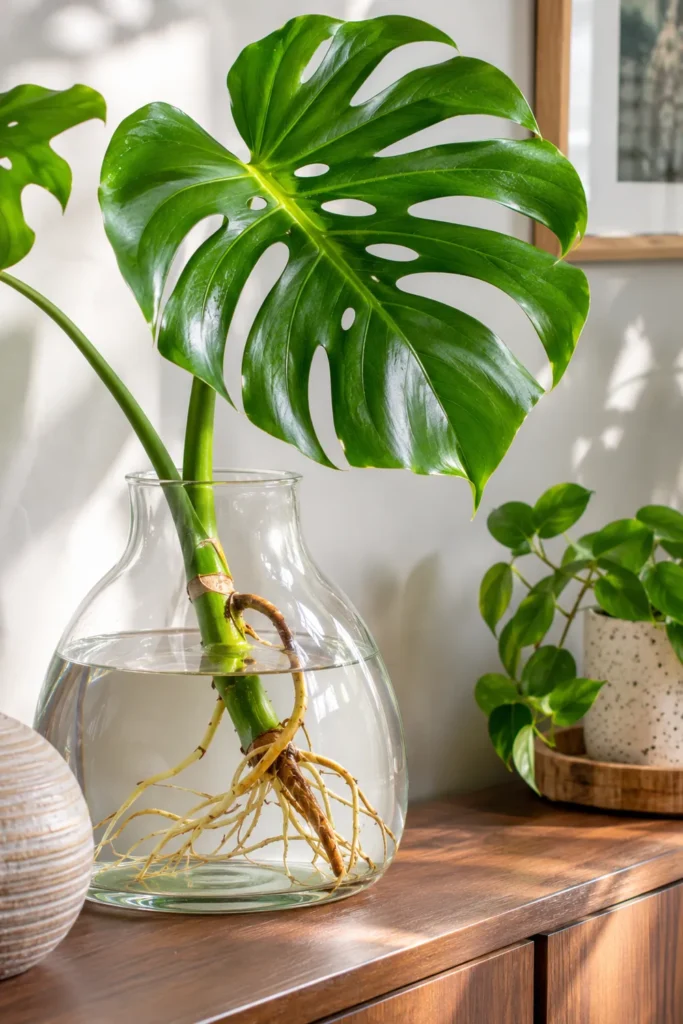
A single monstera leaf in a big glass vase is a statement in itself. The huge, glossy leaves with deep splits and holes look dramatic on a console table or in a bright corner.
The key is the node. A monstera cutting needs at least one node, ideally with an aerial root, the thick brown root that grows along the stem. Without a node, the leaf can live in water for a while but will never grow new leaves. Use a heavy, wide-bottomed vase, because the large leaves make cuttings top-heavy. Give it bright indirect light, and see where to place a monstera plant for the best spot in your home.
As it grows large, monstera usually does better in soil with a support. Monstera is toxic to pets if chewed.
15. Begonia (Begonia)
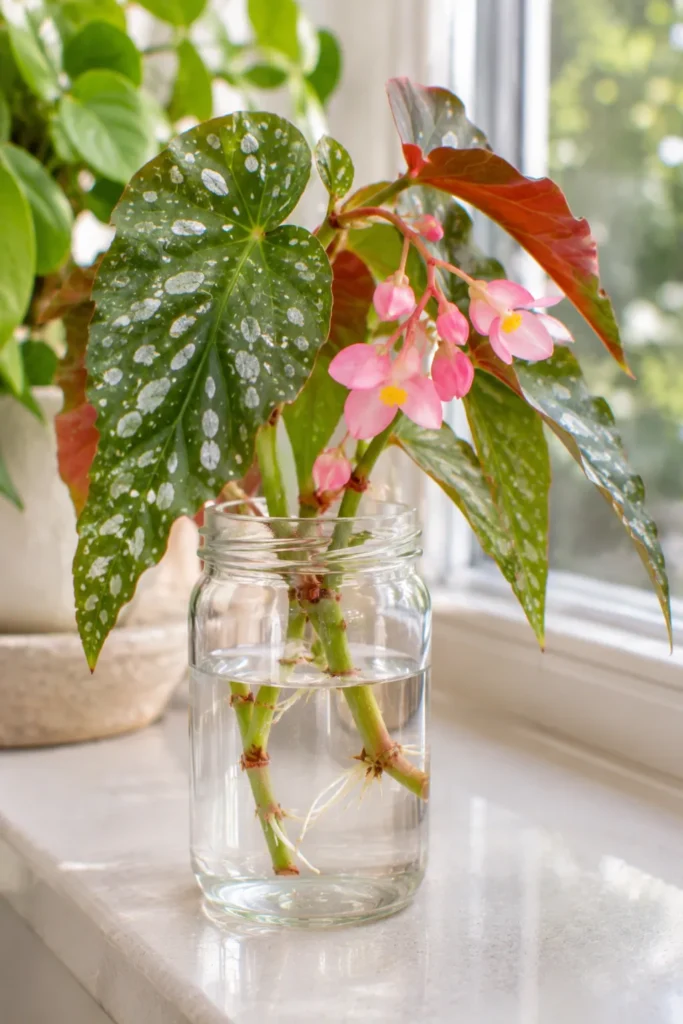
Begonias bring both pretty leaves and flowers to the windowsill. Angel wing and cane begonias have spotted or silver-splashed leaves and clusters of pink, red or white blooms, and their stems root readily in water.
Begonias do best as short-term water plants. The stems can rot if left in water too long, so once roots are an inch or two long, it’s usually best to move the cutting into a light potting mix. Until then, keep the jar in bright indirect light and change the water often to keep it fresh.
Begonias are listed as toxic to cats and dogs, especially the roots and tubers.
16. Hyacinth (Hyacinthus orientalis)
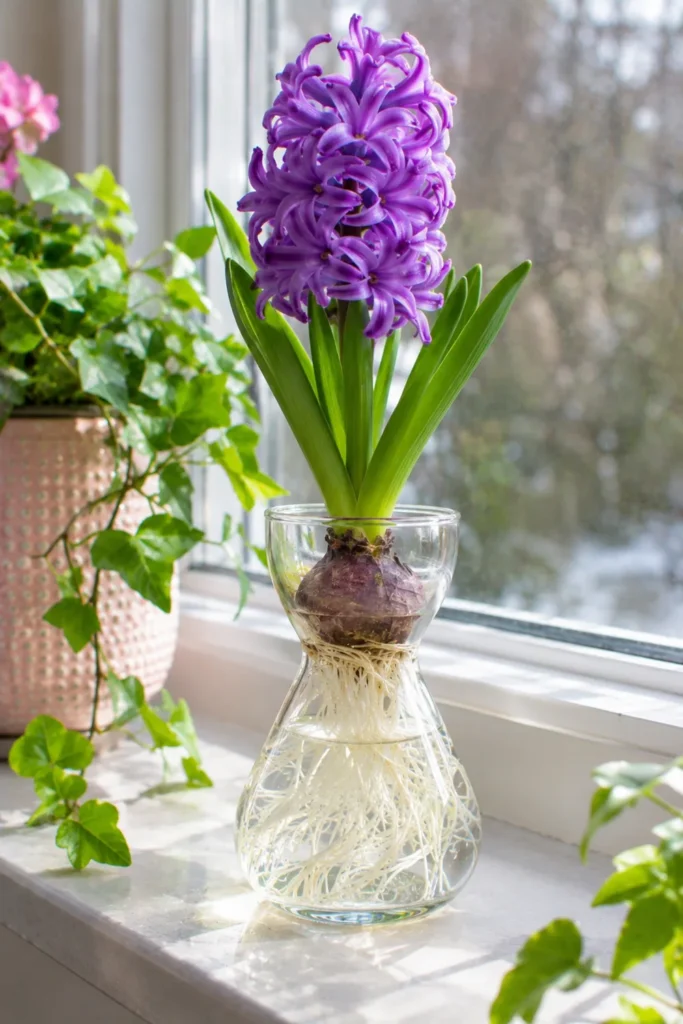
Hyacinth is the winter pick on this list, and late fall is the time to start it. In an hourglass-shaped forcing vase, the bulb sits in the top cup with just its base touching the water. Soon, white roots fill the glass below and a fat bud pushes up from the top.
Hyacinths need a cold period before they’ll bloom indoors. Pre-chilled bulbs from garden centers make this easy. Keep the vase in a cool, dark spot until the roots fill the glass and the shoot is a few inches tall, then move it into bright light. The fragrant pink, blue, purple or white flowers open in late winter and scent a whole room.
After flowering, the bulb is usually spent for indoor forcing, so compost it or plant it outdoors. Hyacinth bulbs are toxic to pets and can irritate skin, so wear gloves when handling them.
How to Grow Houseplants in Water
Every plant on this list follows the same simple routine. Take a cutting just below a node, strip off any leaves that would sit underwater, and set it in clean water in bright indirect light. Change the water every 2 to 4 weeks and rinse the vase each time. Once roots form, feed with a diluted liquid fertilizer, following the label. Then match each plant to your light, and decide whether it will stay in water for good or move to soil later.
| Your light | Good picks from this list | How long in water |
|---|---|---|
| Low light | Lucky bamboo, heartleaf philodendron, Chinese evergreen, golden pothos | Long term |
| Medium light | Peace lily, arrowhead plant, prayer plant, dumb cane | Long term |
| Bright indirect light | Spider plant, inch plant, Swiss cheese vine, monstera, English ivy | Long term, with fresh cuttings as needed |
| Bright light, short stay | Coleus, begonia | A few months, then move to soil |
| Cool, then bright (winter) | Hyacinth in a forcing vase | One season |
Growing Houseplants in Water FAQ
Can houseplants live in water forever?
Many can live in water for years. Pothos, philodendron, lucky bamboo and spider plants are the best bets for the long term. They need fresh water, bright indirect light and occasional diluted fertilizer, since plain water has few nutrients. Others, like coleus and begonia, do better moved to soil after a few months.
How often should you change the water?
Every 2 to 4 weeks is a good routine, and sooner if the water looks cloudy, smells or turns green. Rinse the vase each time to clear away algae and slime. Top up between changes as water evaporates, so the roots always stay covered.
Do plants growing in water need fertilizer?
Yes, once they have roots. Plain water has very few nutrients, so add a diluted liquid houseplant fertilizer, or one made for hydroponics, when you change the water. Follow the label, and use less rather than more. Skip fertilizer for fresh cuttings until roots form.
What kind of water is best for plants in water?
Tap water works for most plants. If leaf tips turn brown, as often happens with lucky bamboo and prayer plants, switch to filtered or rain water. To learn how tougher plants handle water, see whether succulents can grow in water.
Can you move a water-grown plant into soil?
Yes, but go slowly. Roots that grow in water are different from soil roots, so the plant may droop for a week or two while it adjusts. Pot it in a light, well-draining mix, keep the soil evenly moist at first, and give it bright indirect light while new roots form.
Conclusion
Growing plants in water is one of the easiest ways to enjoy houseplants without soil, mess or guesswork. Start with a cutting of pothos or philodendron, a sprig of lucky bamboo or a spider plant baby, and give it a clear glass in bright indirect light. Change the water regularly, feed it lightly once roots appear, and you’ll have a windowsill full of houseplants you can grow in water for years. To show off your trailing jars, these indoor hanging plant ideas offer plenty of inspiration.
Save this for the next time you’re snipping cuttings.